Hosting an international event under a magnifying glass

By Jessica McCarthy, President, Joy Riot
WorldPride. A celebration and a protest. A human rights conference and a sporting event. Concerts, dance parties, support groups. As with most international events, there are many moving pieces. But when planning efforts coincide with a US election whose outcome is pivotal to the LGBTQ+ community, there’s a whole new layer of navigation.
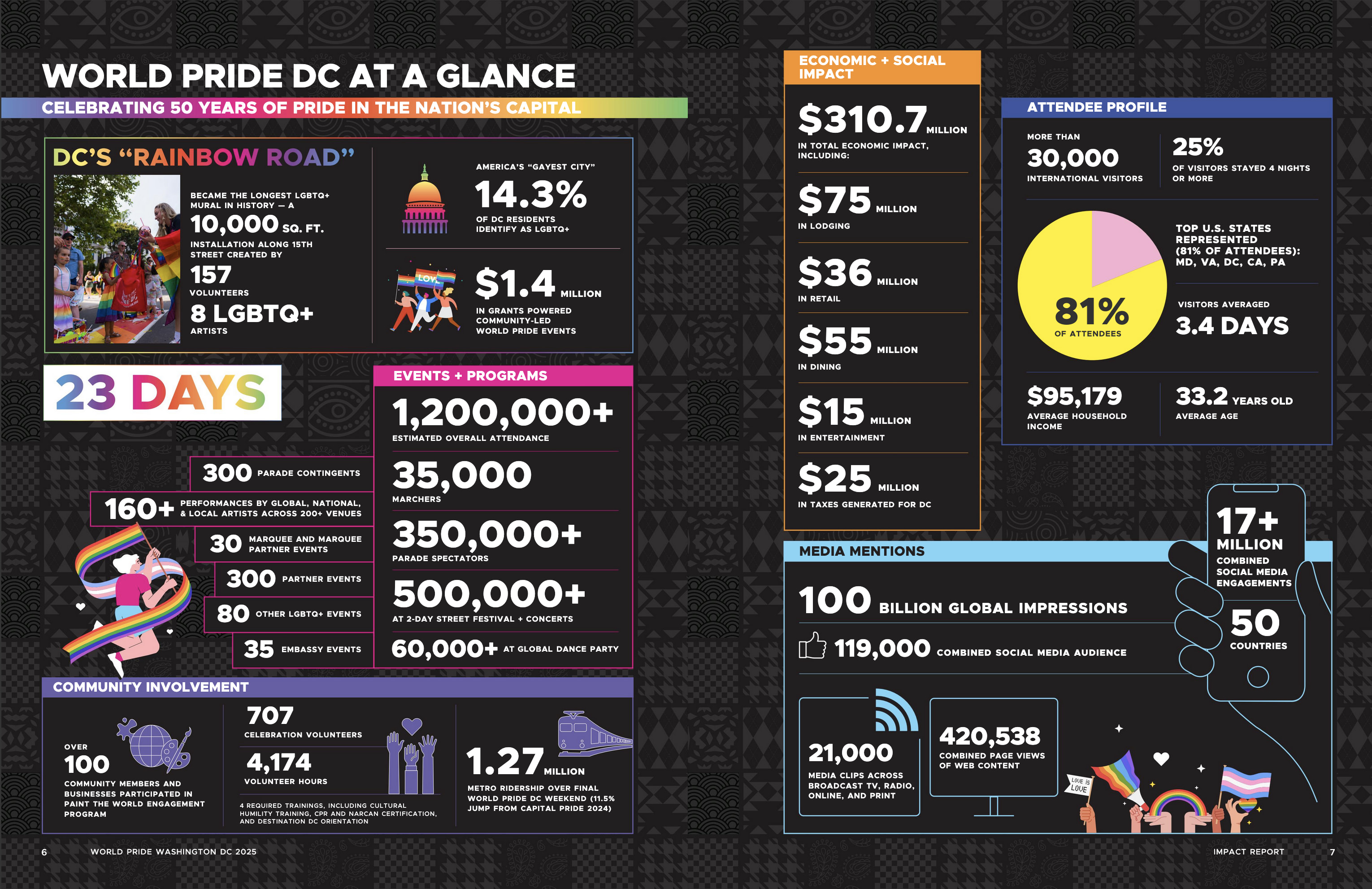
Now, in the end, we attracted over 1.2 million people to over 400 events in Washington, DC over a 23-day period, to celebrate and make their voices heard. And, WorldPride garnered over $310 million in economic impact for the City. The success of this event can be boiled down to a few key areas of focus regarding engagement with the international community.
Success is built through alliances
To pull off a successful event, we needed to attract a large coalition. Yes, the bullseye target audience was the most important. But we also needed the backing of local communities, special interest groups, and businesses who stood to gain from millions of attendees descending upon their city. So in addition to the key players—InterPride, Capital Pride Alliance, DestinationDC, the DC Mayor’s Office, and local institutions—we engaged with partner pride organisations such as Trans Pride and Latino Pride. We engaged local restauranteurs and businesses to Paint the Town with Pride, hosting events, sporting Pride flags, and decorating their storefronts. There were over 700 volunteers who came together offering support of this momentous event.
We hosted regular townhall meetings within these communities to share updates, capture their feedback, and serve as our ears on the ground to gauge the political climate perceptions.
We also needed to consider the user experience outside the main WorldPride events. That meant welcoming visitors from the moment they entered the City—creating welcome centres at key entry points, including the airports and train stations—and creating safe spaces across the City for mixing and mingling. Our PR partners, LRA, engaged with the local cultural attaché and concierge associations to educate the local embassy and hotels about all of the goings-on and encourage them to promote the events as well.
With so many players, it was important to maintain clear communication and assign people to manage the two-way communication required to keep everyone informed and on track. Engaging our communities across the city and the world allowed us to create a fuller, more meaningful, and more memorable experience for those attendees.
Marketing: Guiding the narrative with flexibility.
| One benefit of hosting an event with an active and enthusiastic audience base was that many partners and community members offered to promote WorldPride. Therefore, we needed to manage all communication pieces to keep them working together in support of the main narrative, while also leaving room for flexibility and adaptation. We created an overarching campaign to promote WorldPride 2025 as a whole, with subcampaigns to promote individual events. We ensured our casting for the campaign pulled directly from the DC LGBTQ+ community, including all representative identities. Additionally, since we created the campaign before Election Day, we needed to make sure its tone was relevant no matter who won—a balance of both celebration and advocacy. And of course, this event needed to attract a world audience, not only a domestic one. So it had to be linguistically and culturally adaptable. That meant, for instance, accounting for minor differences in Spanish between Spain and Latin American countries, working with native speakers in all represented languages to check that the sentiment of our overarching campaign survived the translation, and keeping visual cultural nuances relevant. | 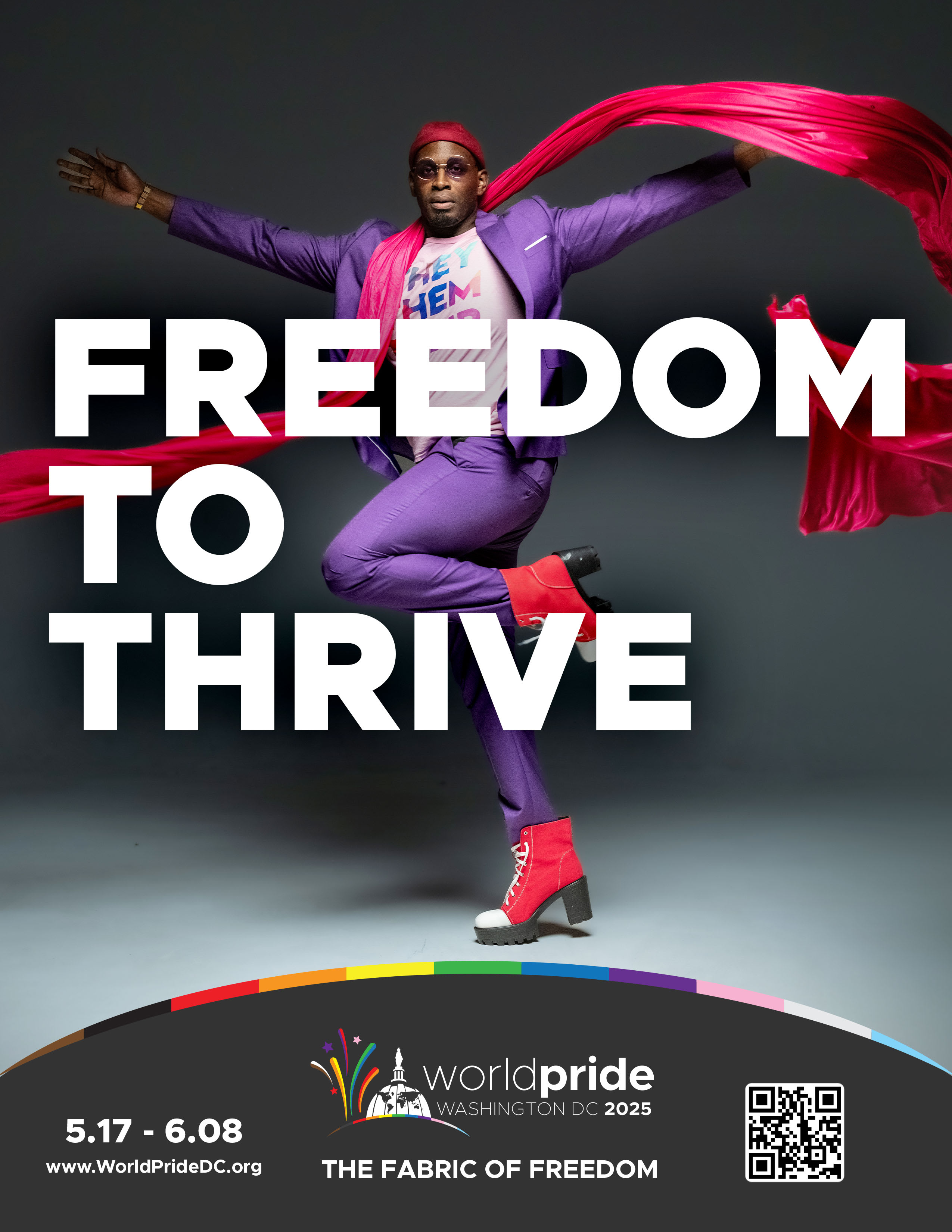 |
Additionally, with so many partners working together, we created a toolkit and campaign guidelines document for partners to be able to develop assets with a similar look and feel, creating a halo effect for the brand.
In order to maximise media spend for the media buy, we looked at key factors such as drive and fly markets. Knowing how far out travellers typically book international flights, we initially focused on more distant markets and, as the event drew nearer, brought the radius of advertising closer to the DC drive market. When identifying international markets, we also considered each nation’s political and social policies toward the LGBTQ+ community, identifying where our ads wouldn’t be able to run and finding PR, social media, and other methodologies for getting in front of the people most likely to travel.
In addition to Joy Riot leading the marketing efforts, there were PR agencies, including our partners, LRA and Lucky Break PR. We combined efforts to create a cohesive plan, and pulled together the marketing and PR teams of all partners involved to keep us all on the same page. We held biweekly meetings to share updates, plans, needs, and what we’ve been hearing.
We worked together to use media spend and PR outreach efficiently across all our combined resources. For example, where our DMO partner, DestinationDC, already had promotions in their typical key markets, we supplemented with different media and additional markets to create a surround-sound approach and cover more ground. We had monthly meetings with tourism partners to keep us on brand and eliminate redundancies.
Most of the elements of WorldPride are not paid or ticketed events, so we had to use a combination of KPIs to optimise throughout the campaign. Of course, for digital media, we tracked the usual clicks and impressions down to type of creative, media, target audience segments, and sites, but we also looked at where people clicked on the site itself. We included registration options for more information about free events to gauge interest and tracked engagement on all social channels. We also tracked sentiment across social, press, and web comments to determine how pieces of the campaign might be adjusted, such as adding a page about safety concerns on the website. We also worked with partners to gather KPIs such as ticket sales to the ticketed events, hotel bookings, and flights into the key airports.
You don’t just need Plan B. You need Plans C-Z.
We forecasted during the planning stages that with the US election chatter around the candidates’ LGBTQ+ policies, we may need to shift gears in our marketing and communications efforts depending on the winner. What we didn’t anticipate was just how drastically policy changes would directly affect WorldPride and the international perceptions—and often misconceptions—we’d have to overcome. We developed a plan B, but ended up needing plans C through Z. Not just in our communications, but also in the planning efforts.
For example, there are many spaces in DC that are operated by the federal government as opposed to the local government. We needed contingency plans in case we lost the ability to host events on federal property. We also dealt with misleadingly placed press coverage about Pride groups in different countries who refused to attend because of the election outcome, when in fact those groups had chosen not to attend prior to Election Day.
Our PR teams determined which media and public commentary we needed to react to, where we needed to set the record straight, and how we continued to move forward when so many assumed the worst. We identified and media-trained key leaders within the primary organisations as well as partner organisations who could speak on behalf of WorldPride to address key questions and correct misconceptions. We had so many media requests, we needed to make sure we had a large pool of potential spokespeople to pull from.
We published tips and tricks for navigating the City during the 3-week period of the event in major local media outlets. We implemented a new app where people from around the world could show their support and ask someone to march for them if they couldn’t attend in person.
Pride started as a protest. That legacy continues, infused with celebration.
Did we lose some attendees because of the political environment in the US? Probably. But through our coordinated marketing and PR efforts, we also captured the attention of the LGBTQ+ community and allies who wouldn’t let politics stand in the way of Pride. Attendees understood it was more important than ever to come together to celebrate and advocate. Pride was started as a protest, after all. But we still threw a tremendous party.