Who taught the machine to recognise its place?

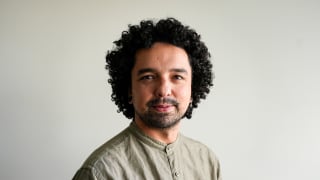
By Caio Esteves, Managing Partner, N/LF
A question inherent to place branding has never been answered; perhaps it has never even been asked: from which worldview did the discipline emerge, and which worldview does it address, and, why not, impose?
This is not about language; that debate is simpler and, ultimately, a distraction. After all, it is possible to conduct an entire place branding process in Portuguese, Swahili, or Tagalog and still operate on the basis of the same founding assumptions: that the place is an asset to be positioned, that identity is a competitive advantage, that the future is a projection to be managed, at most, and that the community is, at best, a stakeholder.
These ideas are not neutral; they were constructed in a specific place, for a specific type of city, within a specific understanding of what urban success means. This idea has taken the world by storm; cities in Latin America, Africa, Southeast Asia, and so many other contexts have started using the same frameworks, the same diagnostics, the same vocabulary, and with them, often, the same blind spots and the same biases.
The place becomes a product, the future becomes a plan, the community becomes a target audience.
How do I know this?
Because I was part of that process.
And then came the machine
Ask any artificial intelligence model to describe your city. It responds fluently, confidently, with an air of objectivity that would convince any decision-maker.
Neuroscientist Miguel Nicolelis constantly points out that AI is neither artificial nor intelligent; it does not say where it learnt to ‘think’ about places, and this is where things get complicated. The known foundations that feed the models, right from their initial corpus, carry evident asymmetries: a predominance of English; a greater presence of content published, indexed and legitimised by institutions capable of generating visibility; and a structural absence of everything that remains in oral tradition, in communal memory, in local archives, in less-indexed languages and in non-hegemonic forms of knowledge.
AI did not invent this problem; it industrialised it and endowed it with the most dangerous quality of all: an appearance of neutrality, reinforced by a somewhat strange yet deeply ingrained notion that technology always has the best solutions. Not infrequently, we treat it almost as a deity.
Nothing is more logical than understanding how this increase in scale impacts places. We have termed this ‘place promptability’—the capacity of a city, neighbourhood, region, or country to be correctly interpreted, synthesised, and narrated by artificial intelligence. Yet this discussion ought to go further. After all, promptability should not merely mean appearing higher in search results, nor being found more easily by generative systems, but rather being recognised with sufficient depth, context, and fidelity so that the synthesis does not entirely replace the complexity of the place with what the machine has already been trained to recognise as a place.
The question that really matters, therefore, is not whether the model gets the description of your city right, but which version of ‘right’ it is using. Because what the machine already believes about your place was decided before any question was asked, and was decided without your community in the room.
Pasts are also plural
When the field thinks of the future, it thinks of it as a temporal extension of the present and, for that very reason, as singular. That ‘the future’ does not exist is already a well-established idea outside the realm of place branding; its plurality is well known in physics, in philosophy, even in large corporations. Yet just as important as thinking about the plural and uncertain nature of futures in places is thinking about the equally plural pasts.
Pasts are not absolute; they are contested, silenced, romanticised, forgotten and reclaimed, and whoever controls the narrative of a place’s pasts also controls the futures that place is capable of imagining for itself. What generative models do when synthesising a city’s ‘identity’ is to choose which past counts, which is invariably the one that has been indexed, published, digitised, written in a language the model understands, and validated by structures that already had sufficient power to produce a record. After all, history is written by the victors, whilst the vanquished are consigned to oblivion.
What has never been indexed does not exist for the machine, and what does not exist for the machine begins to lose its presence in the circuits where perception, reputation, and decision-making are now mediated by LLM models, as though this were simply progress.
African philosophy presents us with a highly relevant addition to this discussion: Sankofa, an ancestral concept proposing that there is no future without memory, and that returning to the past is an active, intentional act, not a nostalgic one. Applied to places, this means that identity is not a passive inheritance; it is a continuous decision about what to remember, how to remember, who has the right to remember, and in the service of which future that memory will be mobilised.
The machine may well have read about Sankofa, but it does not access Sankofa as a living practice, as a communal temporality, as memory transmitted outside the formal circuits of publication, indexing and authority. Conventional place branding, if we are
honest, has also rarely bothered to access this memory as a methodological centre; the difference now lies in the scale, speed, and scope that AI is capable of delivering.
The antidote is not technical
The obvious answer would be: so, let’s feed the models better, with more local narratives, more languages, more voices from the Global South, correcting the bias at source. This would indeed help on the periphery of the problem, but not at its core.
The core is epistemological, and changing epistemology requires something that no model update can deliver: identity built from the inside out, with the community, with intention, anchored in pasts that the community itself chooses to inhabit, and in futures that it can still shape. The issue involves not simply ‘marking’ the place, but rather ‘placing’ it in order to then ‘singularise’ it.
‘Placefying’ is to recognise that a place is not defined solely by form, function, or location, but by connection, memory, use, conflict, desire, and shared meaning.
Singularising, in turn, does not mean manufacturing the present or predicting the future, but exploring them, collectively and continuously, based on a deep understanding of who the place truly is.
When a place possesses this clarity, it resists simplification. It has sufficient depth not to be flattened and is too multifaceted to be reduced to what the machine has learnt to recognise.
The question the field needs to ask is not how to appear better in AI results, but rather whether the worldview that structures these results is not the same one that structured the problem from the outset.
If it is, we already know what to do: we simply need to do the opposite of what we have done so far.