When event hosting puts your place on the map

Events are invaluable to a place’s economy. But in the right circumstances, they can completely revitalise your place’s reputation. Take SXSW in Austin, which helped cement the city as a cool, innovative disruptor.
The question, then, is when it is valuable for a city, region, or nation to go one step further and launch their own event or festival to meet specific community needs? Four of our expert partners highlighted cities who have invested in events that have put their community on the map and highlighted the unique ‘here-ness’ of their home.
Toronto: Luminato Festival
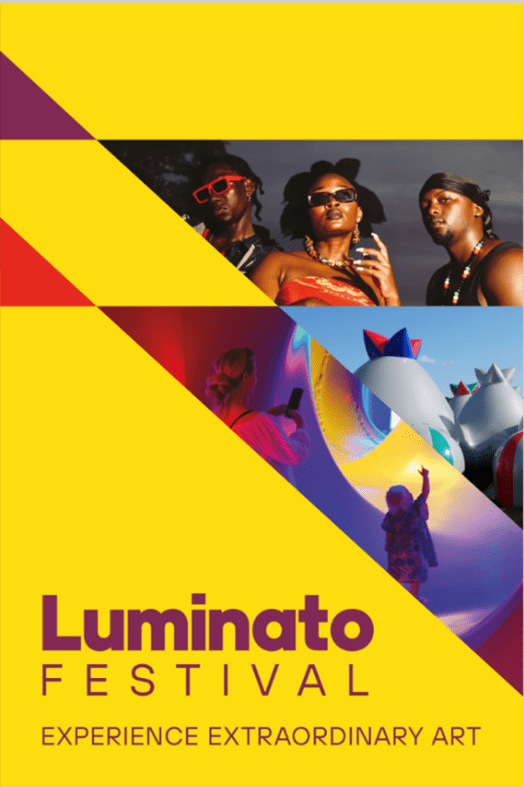 | Successful events must be done in partnership with local stakeholders. Don’t try this alone! But place stewards can be ideal sparks for events and festivals, especially to create new experiences to embody your brand promise or shift outmoded perceptions. Case in point: Toronto’s Luminato Festival. In 2003, the SARS epidemic isolated Canada’s largest city as a “no go” zone for tourism. The actual health crisis lasted only four months, yet its toll on the economy lasted years. A group of city champions, led by Tony Gagliano and David Pecaut, put together the first international calibre, multi-arts festival in North America putting Toronto back on the map as a global cultural centre. Dubbed Luminato, the festival launched in June, 2007 with 10 days of events featuring over 1500 local and international artists. 19 years later, Luminato Festival attracts over one million visitors, generating over $210 million dollars in economic impact. Jeannette Hanna, Chief Strategist, Trajectory |
Edinburgh: Hogmanay
For many visitors, an event is their first invitation to a place. Its value lies in how that moment is shaped. When a place team steps into lead, it is usually because something fundamentally needs stewarding, such as identity, tradition, memory, or the way a city is experienced. City of Edinburgh Council has done this through Edinburgh’s Hogmanay, treating the city itself, its streets, winter setting and shared rituals as the heart of the experience. The impact comes not from the spectacle alone but rather from the intent, continuity and respect for local culture.
At their best, place-led events don’t compete with daily life, they protect it, frame it and invite visitors into a deeper relationship with the place.
Steve Law, Destination Strategy Project Manager, TOPOSOPHY
Boston: Patriots’ Day
Launching a place-led event or festival becomes valuable when it serves a clear strategic purpose, not as a bid for visibility, but as a response to a defined audience need. The most successful examples, from city innovation summits to cultural festivals, are built on intentionality: a clearly identified audience, a credible value exchange, and a reason to convene rooted in place and not replicable elsewhere.
A powerful example is Patriots’ Day in Boston, anchored by the Boston Marathon. It demonstrates how place-led events succeed by reflecting identity. It is a living expression of history, resilience, and civic pride. Observed only in Massachusetts, Patriots’ Day is a direct nod to the Commonwealth’s revolutionary origins, commemorating the Battles of Lexington and Concord and the enduring legacy of those first acts of independence. Patriots’ Day would not resonate in another city, and that specificity is precisely what makes it powerful.
For place teams, the takeaway is clear. When you can define and deliver an experience that reinforces who your community already is and provides meaningful insight to a clearly defined audience, you are ready to launch. Relevance and authenticity are what make events endure.
Matthew Kruchko, Head of Global Operations, Gravity Global
Washington D.C.: National Cherry Blossom Festival
Choose a theme that can’t be replicated in the same way by another place. For example, Washington, D.C. hosts the annual National Cherry Blossom Festival in the United States. The event can be timed every year when the blossoms bloom, and it honours the unique gift of cherry trees from Japan. While the event is ancient in Japan, it began in the US when the Japanese ambassador’s wife and the American first lady planted two trees in 1912. In 2024, 1.6 million visitors attended the festival, drawing $202M in economic impact for the region.
John Armstrong, Chief Creative Officer, Joy Riot