Looking back at the first five years of Limerick’s place branding success

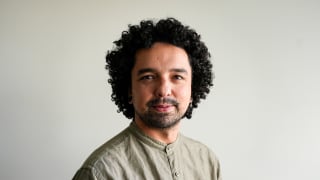
Building the foundations for your place brand strategy is challenging. Keeping the momentum going is even more so. Five years into Limerick’s own place brand journey, Aoife O’Shaughnessy, Marketing Officer - Marketing and Communications for Limerick City and County Council, sat down with us to share how their approach has developed over the years – and shares some thoughts about what comes next.


The place brand strategy for Limerick launched in 2020, when Ireland became the largest English-speaking country in the European Union following Brexit. Five years on, how has the brand strategy evolved?


The launch of Brand Limerick in early 2020 marked a bold step in positioning Limerick as a confident and ambitious player on the global stage. At the time, we could not have foreseen that just six weeks later, the world would come to a standstill due to the Covid-19 pandemic. While many of our plans to internationalise the brand were put on hold, that unexpected pause gave us the opportunity to deeply embed the brand locally and nationally.

Since then, the brand has become a powerful platform for telling Limerick’s story, framing it as an attractive place to live, work, and visit. Today, every communication about Limerick is shaped through this brand lens. Last year, following a comprehensive review and extensive stakeholder engagement, we asked ourselves whether the Limerick message was cutting through as effectively as it could. We recognised that Limerick is still evolving, and so too should our brand story.

To make a stronger impact, we identified the need for a single, unifying message that connects business, tourism and education, both at home and abroad. Though still in its early stages, the new positioning is already being rolled out across tourism and investment campaigns, and we’re excited about its potential.

It not only reinforced our environmental credentials and ambitions, but also captures the essence of Limerick – what we do well, and what we do differently. It has given us the opportunity to spark fresh conversations with domestic audiences, encouraging reappraisal, while also introducing Limerick to international audiences for the first time.


One of the key purposes of the place brand strategy was to challenge negative perceptions of Limerick. How successful has the place brand strategy been in updating your reputation internally and externally?


I think most of us understand that how a place is perceived, nationally and internationally, has a direct impact on its ability to attract business, tourism, trade and investment. More than ever these days, places must actively manage their brand and reputation and our brand has been instrumental in challenging perceptions of Limerick.

For us, the so-called “softer” factors are becoming increasingly important externally. While our narrative continues to highlight Limerick’s vibrant, inclusive and economically dynamic environment, we’re equally focused on showcasing our exceptional quality of life – our green open spaces, shorter commute times, outstanding educational facilities, sustainability initiatives, and rich cultural amenities.

We are consistently reinforcing the message that those who invest in or relocate to Limerick are energised by the unique spirit and character that defines our city and county. It’s encouraging to see our stakeholders and partners across Limerick embracing and amplifying this message in their own communications.

It’s difficult to pinpoint any one moment as a turning point for a change in perception internally but over the last number of years, Limerick has shaken off any hang-ups or insecurities it once had. We feel proud of our county and what Limerick can achieve. There is a palpable confidence in Limerick now and the brand has played a role in that.

Ultimately, investors seek confidence in a location’s value proposition, one that is not only backed by robust data, but also brought to life through a compelling and authentic brand narrative. Limerick delivers on both.


We hear a lot from places about the challenges of measuring the less tangible returns from place marketing and place reputation, such as reputation. What does success look like for you, and how do you measure it? 


Measuring changes in place reputation can be challenging. Of course, we look at quantifiable increases in visitor numbers, investment, business activity and local engagement. So for example, Limerick today is home to over 70 multinational companies, employing thousands of people regionally. We’re proud that, for the third consecutive year, Limerick has ranked 1st for FDI Strategy among micro cities (population under 100,000) in the fDi European Cities and Regions of the Future 2025 awards. For the first time, we’ve also ranked 1st for Human Capital and Lifestyle in this category – recognition of our commitment to enhancing quality of life here, through education, culture, and community.

However, isolating brand impact from factors outside of place branding efforts, such as economic shifts, social trends or external events is difficult. Sentiment analysis and audience recognition is tracked where and when we can and we will be conducting a brand audit later this year to gauge unaided and aided brand awareness among target audiences.  


Last year, you ran a tourism campaign called ‘A Different Kind of Energy’. Is this a campaign platform that you’re continuing to build on? What’s next for Limerick?


We are currently in the process of developing the next phase of our brand strategy, so it’s an exciting time for sure. With a refreshed creative platform to reflect and communicate Limerick’s momentum, our key brand challenge now is to activate and amplify ‘A Different Kind of Energy’, leveraging the unique energy of Limerick to build a stronger, more visible brand that resonates with both internal and external audiences, maximises awareness and reach, and drives engagement whilst building credibility. 


Do you have any advice for how place brand and marketing teams can tap into social media trends without appearing to be inauthentic?


The key to authenticity in this instance is knowing your brand’s core values and your audience. Social media can be your playground for embracing trends and having fun with your brand but if its values are not aligning with trending content it will smack of inauthenticity and audiences will see through it straight away. Rather than mimicking trends, brands should find organic and meaningful ways to integrate them into their narrative.


Given constraints of budget or approvals, it can be hard to get sign off on an approach. What’s your favourite idea that never saw the light of day? 


One that got away was a Rugby World Cup 2023 activation. Limerick has a deep-rooted -connection and long-standing tradition with the sport and so a distinctive activation idea, alongside an engagement mechanic was considered at the time. The concept would have been activated within Limerick, with a halo over to tournament in France. Unfortunately, budgets and logistics were not permitting - maybe the next one out though!


As one of our 2025 judges, what will you be looking for in a winning entry?


 I am honoured to be a judge for this year’s CNP Awards. And excited too! I’m looking forward to reading about the great work other destinations are doing. For me, I would like to see fresh perspectives and strong creative that shows real heart, and taps into the personality of the place and shows me what makes it tick. I also want to understand what challenges the destination overcame and the impact that the work has had across the community.


Thanks, Aoife. We look forward to hearing your insights during the judging days!

Discover CNP Connect

Sign up for this fortnightly newsletter to get the latest insights and inspiration straight to your inbox.

By submitting my information, I agree to the Privacy Policy and Terms of Service.


The Place Brand Portfolio is City Nation Place's searchable portfolio of Awards case studies from the past five years.


share