Cape Town Tourism’s neighbourhood-led approach to destination stewardship

Tourism is increasingly being seen as it truly deserves: as a key pillar of economic growth and as a lever you can pull to manage your long-term place reputation. However, for those living in the front line of cities struggling with overtourism, the experience is far less positive. And it can be very hard to see the long-term economic benefits when your immediate experience is of being crowded out of your own home.
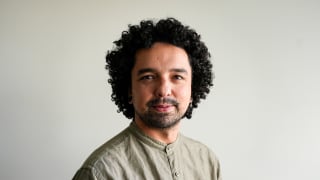
Roxanne Lombard, Destination & Business Intelligence Manager for Cape Town Tourism, sat down with us to explain how they’re taking a comprehensive approach to understanding what’s driving negative tourism sentiment within the city and what they’re doing to empower residents to take a more active role in how tourism develops going forward.
Anti-tourism sentiment is on the rise in a number of cities – what are you experiencing in Cape Town right now?
Cape Town Tourism is a city-funded destination marketing organisation, and part of our current mandate includes neighbourhood-level monitoring. That means looking not only at tourism performance, but also at how Cape Town residents feel about tourism and how it is experienced in different parts of the city.
In recent years, there has been a robust public conversation in Cape Town around the value of tourism, as we have also seen in other destinations across the world. Immediately after the pandemic, when the importance of the visitor economy was especially visible, the focus was understandably on recovery: supporting tourism businesses, rebuilding demand, and communicating the value visitors add to the local economy.
Over the past few years, that conversation has become more complex. Residents are raising questions about how tourism intersects with wider urban pressures, including housing affordability, short-term rentals, and the distribution of tourism benefits. These are not issues tourism can solve alone, but they do affect how residents perceive the visitor economy.
For Cape Town Tourism, that makes resident sentiment an important part of responsible destination management. Our purpose is not only to attract visitors but also to support a tourism ecosystem that creates value for the city and for the people who live here.
That is why neighbourhood-level sentiment matters. Cape Town is not one uniform city, which makes the tourism landscape nuanced across neighbourhoods. Different communities experience tourism differently. In some areas, residents may feel pressure more directly; in others, there is a strong sense that tourism could bring more opportunities through jobs, local enterprise, improved public spaces, better infrastructure and more balanced visitor dispersal.
Understanding those differences helps us move beyond a single citywide narrative and towards a more place-sensitive approach to tourism development.
Can you expand on how you undertook this neighbourhood sentiment monitoring research?
The work began with a tourism product assessment in four priority neighbourhoods identified as part of our mandate. The initial task was to understand the tourism businesses and experiences currently operating in those areas.
What we found was that the number of active tourism products was lower than before the pandemic and that the majority of the businesses previously identified were no longer operating.
That raised a broader set of questions. How were residents experiencing tourism in these places? Were they aware of the closures? Did they see tourism as something that created opportunity, pressure, or both? And what did they feel their neighbourhoods needed to benefit more meaningfully from the visitor economy?
One of the early lessons was that resident engagement requires relationships and presence. It is difficult to generate meaningful participation if you are only reaching people through remote channels or if there is no existing local network to help build trust.
The first phase was qualitative. We conducted in-person video interviews with residents from each of the four priority areas, recruiting four participants per area.
We then added a quantitative phase to broaden the picture and complement the deeper insights from the interviews.
How did you reach your residents with this survey?
The quantitative phase was more challenging. With the support of a research partner, we received just under 300 eligible resident responses across the four areas. Ideally, we would have liked a larger and more representative sample in each neighbourhood, but the process itself was instructive.
We tested different recruitment channels, including social media, and ultimately worked with a provider that had access to a large respondent database. Eligibility was specific: respondents needed to live in Cape Town and in one of the relevant areas.
That showed us something important. If we want ongoing resident insight, we cannot rely only on one-off recruitment exercises. We need a more consistent local feedback network, one built through relationships, presence and trust. That is one of the reasons we are exploring a tourism ambassador programme alongside a local resident database.
The bigger opportunity is to build a sustained feedback loop. That means being more present in these communities, creating opportunities for ongoing conversation, and supporting residents to understand where tourism can create local value, whether through jobs, enterprise development, cultural storytelling, neighbourhood experiences, or improved connections between local businesses and the visitor economy.
It is not only about promoting tourism. It is about building a more informed and reciprocal relationship between residents, tourism businesses and the institutions shaping the city’s visitor economy.
Now that you’ve done the research, what happens next?
One of the clearest takeaways that emerged from our research is the need for a more formal resident feedback mechanism in these neighbourhoods. The ambassador programme is one way to test that. The idea is that local ambassadors could help us monitor sentiment over time, surface neighbourhood-specific opportunities and concerns, and make sure resident voices are part of the conversation about how tourism develops.
For us, this is about moving from consultation as a once-off research exercise to participation as an ongoing part of destination management. It is not about reducing the importance of destination marketing. It is about making sure marketing sits within a broader destination-management approach that also considers resident experience, local benefit, and long-term place value.
The next phase is partly about constructive and evidence-led advocacy. Cape Town Tourism works closely with tourism businesses, but this research helps us bring a more rounded view into the conversation: what residents are experiencing, where they see opportunity, and where better coordination or investment could help tourism create more visible local benefit.
In some areas, residents can see tourism’s potential, but they do not always see how that value translates into their own neighbourhoods. That is where issues such as infrastructure, public space, service delivery, skills development, enterprise support, and visitor dispersal become part of the destination conversation.
Another important message is that residents are central to Cape Town’s destination identity. They are not just a marketing audience or a communications channel; they are part of what gives the city its sense of place. The warmth, creativity, culture, neighbourhood life, and everyday stories of Capetonians are a major part of why people want to visit Cape Town in the first place.
If residents feel disconnected from tourism, or if they cannot see how it contributes to their own communities, tourism becomes abstract. But when residents feel included, respected and able to participate in the visitor economy, they strengthen both the lived experience of the city and the visitor experience.
How are you recruiting your ambassadors?
The ambassador network is still in development. At this stage, we are engaging with organisations that already have a strong footprint and trusted relationships in the relevant communities. That is important because meaningful participation cannot simply be imported from outside; it needs to work through people and organisations that understand the grassroots context.
As mentioned, we also want to create continuity beyond a single research cycle or campaign. The aim is to build local capacity and relationships that can support a longer-term conversation about tourism and neighbourhood development.
The current vision is for partner organisations to help recruit 35 participants across the four pilot areas. We want the group to reflect the diversity of those neighbourhoods, which means we are not only looking for people who are already positive about tourism. We want a more honest and representative conversation.
The process will begin with a two-day workshop. From there, we will identify different roles based on participants’ interests, context and strengths. Some may be well placed to explore tourism product development or neighbourhood storytelling. Others may be better suited to acting as community feedback leads, connectors, or representative voices.
The next phase will depend on what we learn through the workshop. But the ambition is for this to become more than a quarterly check-in or survey panel. Real involvement means creating space for residents to help shape the narrative, identify local opportunities and contribute to how tourism is understood and developed in their areas.
The workshop is a first step: a way to test the approach, understand the level of engagement, and see what kind of structure would be most useful for residents, community partners, tourism businesses, and the City.
When I interviewed your CEO, Enver Duminy, for our ‘City of X: Transforming a cultural strength into place brand success’ report, he spoke about shifting from a DMO to a DXO where the X represents the transformation. Is that still the case?
Yes, I think this project is a practical example of that transformation in action. It began as a tourism product assessment, but it has evolved into something broader: a resident listening process, a neighbourhood insight project and a way of thinking about how tourism can create more shared value across the city.
It is not destination marketing in the traditional sense. It is not directly about promoting Cape Town to visitors. It is about strengthening the conditions that make Cape Town a compelling place to visit and a meaningful place to live.
For us, that is the connection between destination marketing and place stewardship. A city’s appeal does not sit only in its landscapes, attractions or campaigns. It also sits in its people, its neighbourhoods, its stories and its everyday civic life. If tourism is going to remain a long-term asset for Cape Town, residents need to be part of shaping it.