The geography of place branding: How to build multi-dimensional place identities

I have something to confess.
When I’m asked where I work, I say London, no hesitation. This works perfectly – right up until the moment when the other person says “me too!” and I’m forced to confess that I don’t live or work in London at all. On top of that, I’m outside the M25, which makes my lie particularly egregious to any actual locals.
99% of the time, though, this answer is highly effective. It’s certainly more impactful than leading with the name of the village where City Nation Place HQ is actually based.
Place identity is a complex topic, because so many of us belong to so many different layers of place at the same time. You might have strong affiliations with your street, your town, your region, or your nation, and all these identities have to co-exist with one another. From an external perspective, the challenge is based on familiarity. An international audience are unlikely to recognise the name of a small town in Kent, but the chances are very strong that they’ll be familiar with London – and that’s close enough for most conversations.
Place brand and marketing professionals are continuously challenged to navigate the multi-dimensional nature of place, understanding when to lead with a city brand versus a regional or nation brand. We reached out to our City Nation Place UK speakers to understand how they identify which approach is of most relevance to which audiences and discover what a layered approach to place brand and marketing looks like in action.
Speaking to your audience in their language
Mark Mobbs, Assistant Director for the South Yorkshire narrative and place brand at the South Yorkshire Mayoral Combined Authority, explained it most succinctly: “Marketing should be led by audience need[.] Brand building (i.e. reputation), in purely theoretical terms, all should ladder into each other neatly: ‘Rotherham, South Yorkshire, England’ should have commutable properties in their identities.”
If we begin by understanding that place marketing is the expression of your place values in pursuit of a strategic goal such as attracting visitors, talent, or investment, then the challenge is to build place brands that work like nesting dolls: each layer reveals a new facet of a place, whilst cohesively belonging as part of the whole. Marketing campaigns can then activate the most appropriate layer for each marketing campaign, without feeling inauthentic to any of those place identities.
It all comes down to the specific audience and what action you’re asking of them. According to Sharon Appleby, CEO of Sunderland BID, a city brand is often the most effective way to reach local residents or day visitors, as it creates a clear sense of place for an audience who already have a deep familiarity with who you are. By comparison, a regional brand is often more impactful when reaching external audiences. “The North East has a strong reputation that Sunderland can benefit from,” Sharon explained. “For tourism, many visitors don’t see Sunderland in isolation – they’re planning a trip to the North East. Positioning Sunderland as part of that wider offer encourages longer stays and allows us to promote the city alongside other regional attractions.”
Example 1: Glasgow
Glasgow’s People Make Glasgow city brand has been enormously successful as a platform for civic pride. Meanwhile, the Visit Glasgow brand operates externally to persuade people to travel to the city. The two audiences necessitate different messaging.
“We developed a hyper-local (and very Scottish) campaign to help support People Make Glasgow – ‘Get You In Town’. This is a phrase said by Glasgwegians, and for them, town means Glasgow,” explained Alex Harvie, Head of City Marketing at Destination Glasgow. “We crafted the film so it would be clear and resonate even if people don’t understand the nuance, but for those who do, it would have extra depth.”
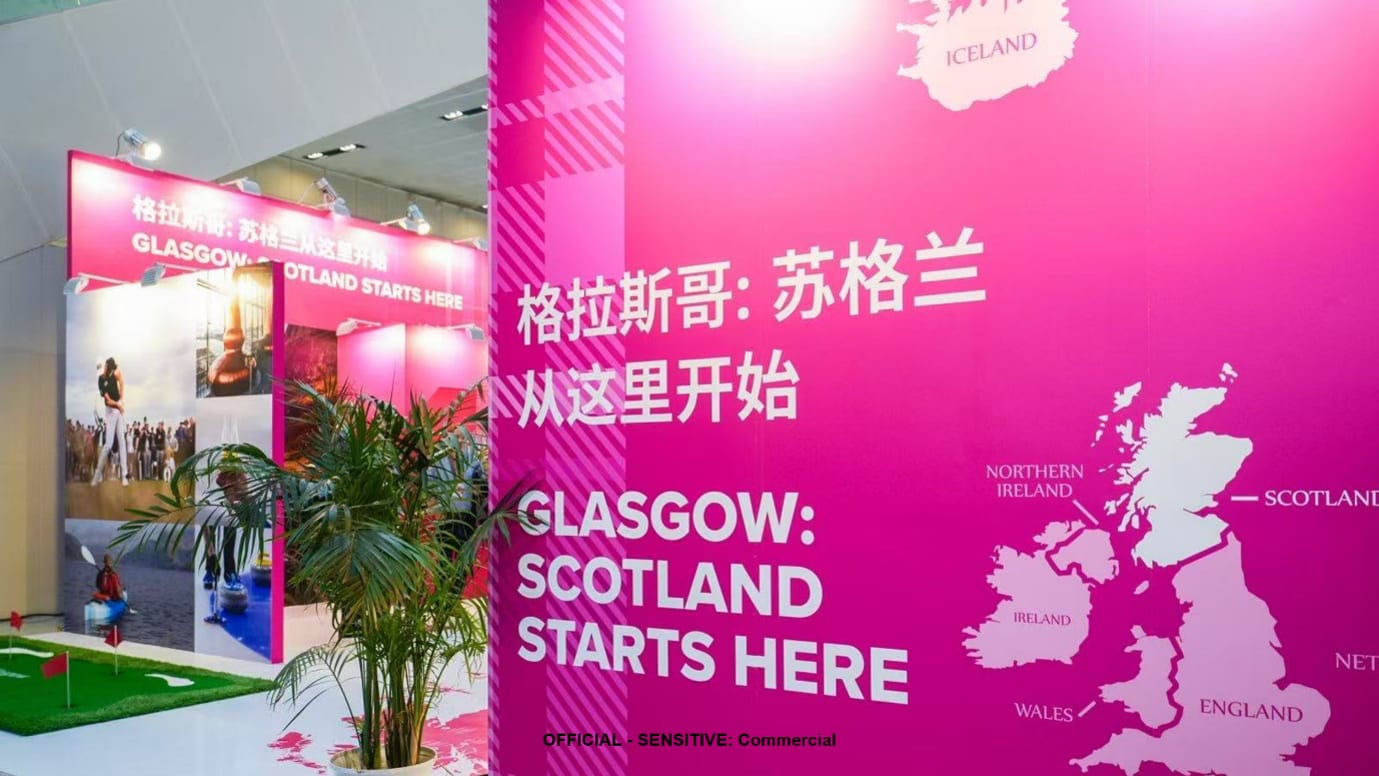
By leaning into local jokes, including the iconic traffic cones on the Duke of Wellington statue, the campaign leans into the sense of belonging and community that pervades Glasgow, whilst giving UK residents a taste of life in the city. For broader, international audiences, the priority is instead on presenting iconic Scottish elements with a Glaswegian twist. For example, in a recent campaign in China, the visuals led with a tartan print in Glasgow’s hot pink colour. “Our international work focuses on Scotland as the start of the visitor experience, with Glasgow as secondary,” Alex continued.
Example 2: Atom Valley
Atom Valley is an innovation mega-cluster within Greater Manchester, bringing together research, manufacturing, and materials to help build a greener, fairer, more prosperous future, and to establish Greater Manchester’s reputation as a place to live, thrive, and grow old.
Spanning sites across Bury, Oldham, and Rochdale, the investment pitch for Atom Valley naturally lends itself to a regional approach, highlighting advantages such as connectivity, housing, and access to talent. But it also allows each council to focus on the attributes which most set them apart.
“We made a conscious decision to tell the Atom Valley story through the lens of place rather than simply geography. Rather than asking people to invest in a region, we’re demonstrating why this particular location offers a great investment opportunity for businesses and their workforce,” shared Rachel Laver, Managing Director at Rochdale Development Agency. “In an increasingly competitive marketplace, authenticity and specificity cut through far more effectively than generic place marketing.”
Example 3: Norfolk and Suffolk
Creating layered place brand and marketing strategies is also vital in navigating your newest audience: AI algorithms. As LLMs become increasingly popular, cities, regions, and nations are challenged to ensure they show up on brand and on time in AI-powered answers.
“With the advent of VisitEngland LVEP accreditation for Norfolk and Suffolk, we were able to release the shackles and reshape our destinations by SEO, AI, and CX (Customer Experience),” outlined Pete Waters MBE, Executive Director at Visit East of England / Suffolk and Norfolk LVEP. “[It] had made a huge difference to how we engage with potential visitors.”
As the team works to spread demand seasonally and geographically, a connected trio of websites for East of England, Norfolk, and Suffolk respectively are allowing the team to reach prospective visitors where and when they’re searching. The unified brand sits across all the sites, but this strategy responds to visitors who may be searching to stay in Norfolk, rather than the East of England, and vice versa.
Lessons in effective place layering
How do you make this work in practice though, when each team is working in their own organisations? South Yorkshire Mayoral Combined Authority’s Mark Mobbs highlighted one of the challenges created when much of the work has been centralised for so long. “Our ‘nation’ campaign work (quite excellently) promotes the UK as a whole to trade, tourism, and target audiences, but in – my opinion – Scotland, Ireland, and Wales all have fairly distinct identities that are more defined than England’s.”
As a result, Mark argues, many English cities have stronger brands than England itself. Meanwhile, regional brands are still starting out and are often challenged by the difference between how the populace views the region in comparison to where council boundaries lie.
“I believe regional place branding can really help the cities and towns within them, as well as contribute to building a national picture that needs a coordinated approach,” Mark continued. “So in my work I’m trying to drive benefit to South Yorkshire’s places, whilst enhancing our collective strength in a way that is helpful to the nation.”
Here are three key areas you need to get right to ensure that your strategy responds dynamically to the multi-dimensional nature of our places.
- Follow the needs of your audience and meet them where they’re searching. Investors may be looking for strengths best found across a region. International travellers will likely be starting at a national level and filtering down, whilst domestic travellers will be more drawn by a city focus. Understand what they’re looking for, and make sure you’re surfacing the right message at the right time.
- Your city, region, and national brands should build upon one another, each adding another component to the overall picture. As Sunderland BID’s Sharon Appleby shared, “brands should complement each other rather than compete.”
- Authenticity is the key to ensuring your place strategy is complementary to any parallel place brands, whilst providing a distinct, compelling offer. “The UK is made up of places with distinct histories, identities, strengths and communities. Those differences should be celebrated rather than glossed over,” explained Rochdale Development Agency’s Rachel Laver. “Whether you're talking about a city, a region or a nation, the brand needs to be rooted in what genuinely makes that place unique.”
Join us at City Nation Place UK in Bradford this September 23rd and 24th to discover how you can apply place brand thinking to strengthen your place economies and build pride of place in your communities.
Mark, Sharon, Alex, Rachel, and Pete will be sharing their expertise on the stage, alongside place practitioners from Invest Manchester, Leeds Council, Edinburgh Council, and the Department for Digital, Culture, Media, & Support. See the full agenda here or find out how you can book a ticket to join the conversations here.