Understanding what drives perceptions of your place: It’s complicated

By Clare Dewhirst, CEO, City Nation Place
I don’t often quote Jeff Bezos. In fact, I’m not sure I ever have before. But it was apparently the Amazon founder who said, “Your brand is what other people say about you when you’re not in the room." This quote goes some way towards explaining why understanding what people say about your place, as well as what they feel or think about your place, is so important. Your place’s reputation is shaped by these perceptions, and your place’s reputation directly impacts your place’s economy.
Over the past couple of months, I have been immersed in building an understanding of how place brand and marketing teams are investing in understanding perceptions of their place. Next week we will be publishing a full report, “Tracking perceptions of place”, to share what we’ve learned, but I’d like to pull out just one aspect – a cautionary warning…
Let’s not go backwards in our understanding of what drives connection to place.
The alluring myth of AI supremacy
What do I mean?
Well, from our survey of over 140 place brand and marketing teams, we learned that one of the most cited obstacles to the work being done to understand perceptions of place is the lack of budget and/or the lack of resources. Traditional ad hoc or commissioned research can be expensive, as can access to the deeper dive data available with the more well-known nation or city brand rankings.
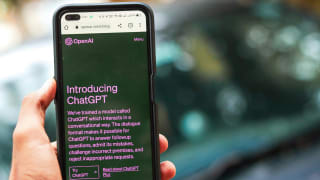
At the same time, AI-driven answer engines are having a growing influence on the decisions that people make about travel, study, migration, and investment. On the one hand, this is challenging place teams to rethink marketing strategies to understand how and where your place is – or is not – showing up. On the other hand, these tools are offering a new route to understanding how your place shows up in those conversations that happen when you are not in the room. There’s the potential for “do it yourself” research approaches – just ask the AI models what people think of your place. Surely this can be done relatively cheaply? It’s easy!
No. It is, in fact, very complicated.
As part of our research process for the report, we convened a group of place leaders who are actively experimenting or leading on approaches to understanding how AI answer engines are representing their place. The language I’ve used here is carefully chosen; the first basic recommendation from the workshop discussion is that you shouldn’t be asking the models what they “think” of your place but instead testing the kinds of questions real people might be asking and seeing what responses are given.
Assets versus values and the impact on place brand strategies
I’m very grateful to the workshop participants for being so open and honest with what they are learning, and we’ve been able to include lots of practical tips in the report for shaping your own approach to what the group agreed was “necessary” work. The answer engines are informing and contributing to perceptions and decision making and it is essential that you understand what they are saying, where they are sourcing their information, and how you can therefore influence what answers they give.
However, amongst many cautionary notes, the place leaders in the workshop group also acknowledged that AI is very good at presenting facts, and when this relates to places, the answers are likely to focus on assets, physical competitive advantages, policies, and financial advantages. What they are less good at understanding or providing are the values of a place, or the way a place can make you feel, or what drives the people of the place – the harder to measure things that impact on connection to and attractiveness of place.
This raised alarm bells. For too long we’ve seen places and destinations producing interchangeable place brand positionings and assets-based marketing communications that fail to change minds or have a measurable impact on deep-held perceptions of a place. Any work to understand the story that is being told about your place when you’re not in the room should of course inform your strategic approach to building and managing your place reputation, but it would feel like a step backwards if places relied on what they can see the LLMs are saying and so focused on how to ensure that their competitive assets are at the centre of the story.
That’s a key learning that I hope comes across in the resulting report, validated by the survey research, independent interviews with place leaders, expert perspectives, and summaries of the workshop discussions. Any work you do to understand what AI is saying about you needs to be validated by other research: there need to be layers to your approach to understanding what is driving audience perceptions of your place. Whether this is layering quantitative data with qualitative research or global survey data with understanding how people experience your place, it needs to be all about understanding the gap between perceptions of your place and what you know your place to be.
You don’t need to be all things to all people.
A strong sense of your place identity, what makes your place “work”, and how your place makes people feel will also give you a better understanding of whose perceptions you want to understand and influence. You don’t have to impress everyone. Remembering this can help you be more targeted with where and how you invest in perceptions tracking research when budgets are more limited.
77% of the respondents to our survey said that they spent 5% of their overall budget on research to understand perceptions. We’ll be publishing the full report next week, but I hope that in the meantime this provides a useful benchmark for your own organisation. Make sure to check out the full report in a week’s time to get the insights and ideas to ensure this spend is invested wisely!