Thailand is activating city brands as creative assets for their nation. Here’s how.

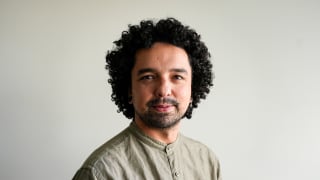
The Government of Thailand has a new vision for the next wave of the nation’s growth: the creative economy. From working with local creators, businesses, and communities to brand cities as distinctive assets to activating festivals as scalable economic infrastructure, this five-year plan is rewriting Thailand’s economic future. Pichit Virankabutra, Deputy Executive Director for the Creative Economy Agency (CEA) for the Government of Thailand, joined us ahead of City Nation Place Global to discuss this work in more depth and to explore how they’re creating a narrative that is strengthening the international and domestic reputation of Thailand.
In 2023, Thailand launched a five-year plan to transform its creative industries. What prompted the initiation of this strategy?
The primary catalyst was the urgent need to move Thailand beyond the 'middle-income trap.' We fully recognise that our traditional economic model, which relies heavily on Original Equipment manufacturing and low-cost labour, is no longer sustainable for driving the country forward. We needed a new economic engine, and we found a highly powerful one in our cultural capital and creativity. This sector already demonstrates immense potential, currently contributing 1.63 trillion THB (approximately US$49bn), or 8.78% of our national GDP.
Therefore, this 5-year strategy was initiated to systematically transition our economic structure toward an 'IP-based Economy'. We are deliberately shifting our focus away from low value-added production and short-term, project-based creative contracting. Instead, our ultimate goal is to empower Thai creators to become actual owners of intellectual property and copyrights. By doing so, we can transform our rich cultural heritage into tangible, globally competitive economic assets that generate sustainable, long-term revenue.
What will success look like for the programme? How do you intend to measure this?
For us, "success" means that our creative entrepreneurs can effectively scale their businesses and tangibly monetize their Intellectual Property (IP). CEA measures this success systematically through both economic and social impacts. Our key metrics include: 1) the increase in average revenue of creative SMEs, 2) the number of new creative enterprises established, 3) the volume of B2B transactions generated both domestically and internationally, and 4) the successful upskilling of the creative workforce.
You’re halfway through the plan at this point. What do you think the most important thing you’ve learned from the strategy so far?
The most crucial lesson learned is identifying our true "bottlenecks." The issue is not a lack of creativity, but rather a fragmented ecosystem and the inability to effectively monetise IP. We have learned that simply organising events or festivals is no longer enough. Instead, we must build structural platforms that seamlessly connect value creation directly to the market and innovation.
You’ve brought numerous stakeholders together in the Creative Economy Agency to ensure you have the ecosystem you need to nurture your creative economy. What have you found to be most successful when it comes to engaging external partners in the importance of participating in this programme?
The success factor lies in CEA's role as a "Facilitator" utilising the 4P (Public-Private-People Partnership) framework. We ensure that external partners clearly see the shared value. We use empirical data to show them that the creative economy possesses a high economic multiplier effect of 1.9x. This means every 1 THB invested in the creative sector significantly stimulates growth in adjacent sectors like tourism, services, and technology. To give our partners a clear picture, we have data proving the high investment efficiency of Thailand's creative sector. On average, every 1 THB invested in our Creator Economy (such as film, music, and digital media) generates a total economic value of 1.47 THB. This is why partnering with CEA is a highly rewarding investment.
Thailand has nine UNESCO Creative Cities. How are you using the strength of Thailand’s national reputation to support the growth of your city brands?
Authentic city branding cannot rely merely on superficial logos or slogans; it must grow from the city's roots. Therefore, we launched a flagship initiative called "Neramyth City: Branding Cities into Creative Assets." In collaboration with the Tourism Authority of Thailand (TAT) and 9 pilot cities (such as Phetchaburi, Sakon Nakhon, and Nakhon Si Thammarat), we are shifting the paradigm.
We focus on an "Inside-Out" process that fosters local ownership, unlocking genuine identities and transforming them into economic assets. CEA acts as a mentor and facilitator, providing the tools and networks necessary for these cities to attract investment, young talent, and quality tourists. Ultimately, we aim to transform these locations into sustainable cities that are truly liveable, investable, and visitable.
Are you connecting this to civic pride? What strategies do you have in place to ensure Thai citizens benefit from the strategies you’re putting in place?
When we successfully commercialise cultural capital, it directly leads to job creation and inclusive income distribution back into the communities. Our strategy is based on co-creation, ensuring local communities take ownership of these initiatives. When people see their way of life and local wisdom recognised globally and providing a sustainable livelihood, genuine civic pride is naturally fostered.
What’s next for the Creative Economy Agency? Do you have any ideas or initiatives in the pipeline that you’re particularly excited about?
Many people may still view the Creative Economy merely as an artistic endeavour or strictly about content creators, but the world sees it much broader today. Recently, the World Bank designated the Creative Economy as one of Thailand's top 5 Industries of the Future. It possesses immense potential to drive growth, attract investment, and create high-quality jobs in the long term, alongside sectors like Advanced Manufacturing, Agribusiness, Digital Services, and Sustainable & Health Tourism. Therefore, this is no longer just about the 'creative circle,' but the entire Thai economy.
What CEA does is not simply supporting creativity for aesthetic purposes, but transforming creativity into economic value—creating new businesses, enhancing entrepreneurs' competitiveness, building liveable cities, and providing opportunities for Thais to compete globally. Because in today's world, the countries that thrive are not necessarily those with the most natural resources, but those that can best turn ideas into economic value. And that is the core mission CEA is driving forward, which directly aligns with the government's major foreign affairs milestone: pushing for Thailand to join the OECD by 2028. This will elevate our industrial and creative service standards to truly meet international benchmarks.
To achieve this, our most exciting next steps involve national structural upgrades. We are developing the Thai Creative IP Market & Finance Platform (TCIP), a revolutionary platform that will enable Thai creators to seamlessly monetise their IP and access financing. We are also establishing a CreativeTech Sandbox and a Co-Production Accelerator to integrate cutting-edge technology into Thailand's creative value chains.
That’s an incredible pipeline of projects! Good luck, and we look forward to hearing more from you at the City Nation Place Global conference.
Pichit Virankabutra will be joining us in London at the City Nation Place Global conference to share the Creative Economy Agency’s mission and what other cities and nations can learn about activating and strengthening their own creative sector. Explore the agenda here to learn more.