The Gold Coast’s secret to stakeholder management

Unearthing your place brand DNA is step one. Step two? It’s making sure your stakeholders are with you on your place brand journey.
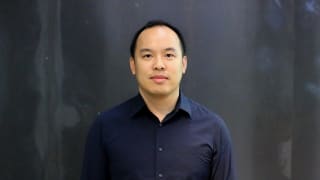
Antonio Moreira, Partnerships & Operations Manager for Brand Gold Coast, joined us to explain how they are mapping out stakeholders across the city – and why a boating metaphor is helping the team to explain how each stakeholder can contribute to the Gold Coast’s place brand journey.
Brand Gold Coast is relatively new. How did you map out the most relevant stakeholders as you started your place brand journey?
We started with the philosophy that all Gold Coasters were deeply relevant, and we spoke to hundreds of them, one on one, to put together the brand story. So, from the beginning we didn’t focus solely on “the usual suspects.” Yet we did ask, in the interviews, “Is there someone who exemplifies the Gold Coast at its best?”
This really helped with round one of our own storytelling efforts.
For more formal mapping, we started by aligning the City and our sister economic development organisations before asking anyone else to help carry the story.
Then we deliberately thought of it as a map, not a contact list. A list only shows who we already knew; a map shows where the story already lives, who has real influence, and where the gaps are.
We mapped stakeholders through three lenses: where the Gold Coast story already appears in everyday life, the kind of leverage each relationship brings, and which sectors and communities we needed to reach across the whole city, not just the obvious places.
We also let the evidence guide us. Our research showed that some sectors contribute significant brand value while receiving little recognition. That helped us identify where to focus first.
You've taken a creative approach to segmenting stakeholders by the roles they play. Can you explain that?
We don't group partners by size or profile or importance. We group them by the job they can do for the story, and since we're a coastal city, we borrowed the metaphor of a boat to describe it.
Some partners are Anchors: they embed the story into systems and long-term decisions. Think universities, major precincts, or the City itself. Some are Sails: they catch the wind and carry the story to new audiences through their networks, events, and platforms. And some are the Crew: the makers, clubs, and community groups who activate it on the ground and give it everyday proof.
It's not a ranking.
They’re different jobs on the same boat – internal working categories for us, not public labels. Grouping partners by role is simply how a small team focuses its effort where the story can move furthest.
This isn’t about narrowing who we work with. Being open and co-operative is central to our approach, and we want to work with as many partners as possible. It’s about matching our effort to the right opportunities so we can be proactive rather than reactive as they emerge.
How will you vary your engagement to accommodate the different roles each partner plays?
We are a client service organisation, so we start from what each partner needs. Different partners play different roles in moving the story, so our support flexes to fit them, rather than following one template.
For a partner helping us embed the story into big, long-term decisions, that might be executive alignment, research, and advisory support. For one carrying it out to new audiences, it's sector prompts, case studies, and activation tools. For those bringing the place story to life on the ground, it's practical, hands-on storytelling support and workshops. And underneath all of it sits an open layer anyone can use, self-serve, with no commitment.
It's always a two-way relationship. We bring the story, the tools, the insight, and the alignment; partners bring reach, action, lived experience, and credibility. We also run a simple pathway: identify, qualify, align, act, review. This way our time goes where there's genuine, shared purpose. But the door stays open to everyone, and managed partnership is a step we take together when the time's right, rather than acting as a gate anyone has to pass.
Do you have plans to nurture the next generation of champions?
Yes, and it's built into the system. Think of our open layer as the harbour: it's open to everyone, and it's where every journey starts. Some of our strongest partnerships began with someone simply coming in and picking up the story, and from there the pathway lets a contributor grow into a partner over time.
Practically, we're taking storytelling workshops out into communities that haven't had them before and partnering with organisations that reach audiences we can't, so we're teaching people to tell their own story well. Our university partners and Study Gold Coast connect us to students, the literal next generation. And we're exploring a provenance mark, a way for the next wave of Gold Coast businesses to formally carry and champion the place.
For us, nurturing the next generation is really about creating the space for people to grow in their own time. They start in the harbour, finding their own way in as they discover the story and see themselves in it and we nurture that along the way, sharing our research and teaching the craft through workshops, so they have what they need to keep going and, in time, sail further.
Which tools or approaches have been most impactful in engaging stakeholders?
Three things.
First, giving people a story that's genuinely theirs to use: an open toolkit rather than a campaign to adopt. It's a true story. It didn't come from an agency or a boardroom; it came from listening to Gold Coasters directly and hearing the same things said back to us again and again. When people pick it up, they recognise themselves in it straight away. It's honest, accurate and built from the ground up, told by Gold Coasters, for Gold Coasters. That's why people lean in. The story already feels like theirs, because it is.
Second, the evidence. Having an independent brand valuation meant we could sit across from a CEO or a Vice-Chancellor and talk about the brand as a multi-billion-dollar asset and a lever on investment, not just a nice idea. Evidence opens senior doors and stops you chasing the loudest voice in the room.
And third, storytelling as the method, not just the content. It's the same craft we used to build the Gold Coast place brand in the first place, so it made sense to bring our stakeholders in the same way. Rather than hand people a strategy, we tell it as a story. Talking about the harbour, the boat, and the net transforms a genuinely complex idea into something they grasp straight away and can carry into a conversation of their own. If we're asking partners to carry the Gold Coast story, it's only right that we engage them through story too.
Any advice for others looking to strengthen their stakeholder engagement?
When I was learning what other place brand organisations do, I realised pretty quickly that there's no single model to copy. In fact, copying can be a risk in itself. It's tempting to assume that because an approach worked somewhere else it'll work for you, but places don't transfer that neatly.
You'll find places that look a lot like yours: the same geography, the same weather, the same language, and from the outside the culture can seem identical. But there's always something underneath that's genuinely different, and that difference is the thing you have to go and find. It's usually where your real story lives.
My only advice is quite simple: listen, deeply and carefully.
Respond to what your community actually needs and to the challenge you were set up to solve, not to what looked good on someone else's stage. Learning from other places is genuinely valuable. It stretches your thinking and adds to your repertoire. Just don't mistake inspiration for a template. That's exactly what we did here. You see the same pattern right across Australia: different places taking quite different approaches, each one shaped by the community in front of them. There isn't one Australian way to do this, let alone one to lift from overseas.
I know that “listen" isn't a tidy, tangible method or framework, but I honestly believe the value of genuinely listening to your community is immeasurable. When you do it properly, with real attention and a bit of passion, something inside you quietly starts to hum and you begin to understand what people are really trying to say.
Finally, anything you're particularly excited about? What should we keep an eye on?
The thing I’m most excited about is a provenance mark for the Gold Coast: a way for local businesses to show their products are genuinely from here and for people to choose them because of that. It’s about building preference for what’s made locally. National sentiment research points directly to it: craftsmanship and locally made products are things people already value and want to support. A provenance mark gives that sentiment something tangible to rally around.
More broadly, we’re still at the beginning of this journey. We’ll soon be launching our full website and toolkit, giving anyone access to the Gold Coast story to use in their own work, alongside a calendar of workshops and events for people to take part in. Our team has recently grown as well, which means we can do more, and there are some genuinely exciting opportunities and major projects taking shape across the city. There’s a lot in motion.
“Watch this space” may be a cliché, but it’s probably the most honest answer. We’re only at the beginning of the journey, and the best is yet to come.