From decline to demand: How Idanha-a-Nova proves place branding works
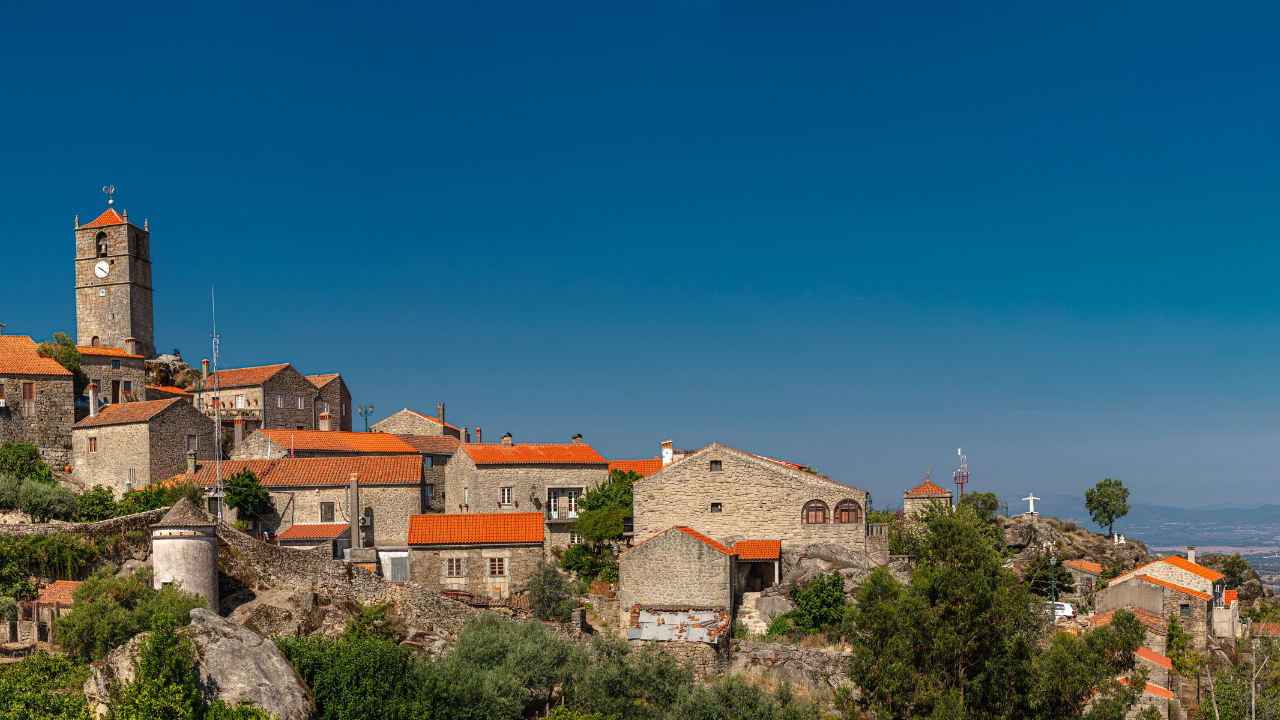
A rural municipality facing decline.
Idanha-a-Nova is a rural municipality in central Portugal with a bit more than 1,400 square kilometers, making it the second largest in the country. To put this in perspective, it is 2.3 times bigger than Madrid. Yet, despite its vast territory, Idanha today is home to just 8,000 inhabitants – fewer people than the daily visitors of Madrid’s Reina Sofia Museum. With a population density of just 6.2 inhabitants per square kilometer, it is also one of the least densely populated municipalities in Portugal. This paradox – enormous in size, yet tiny in population – sets the stage for Idanha’s unique challenge.
The challenge: A territory on the brink
Like many rural areas in Europe, Idanha faced a dramatic demographic decline. Over 50 years, its population plummeted by 70%, from 35,000 to 8,000 residents. With such a trajectory, the municipality risked vanishing. The narrative around rural Portugal didn’t help, portraying the countryside as outdated, impoverished, and disconnected from modern life. Facing these pressures, in 2013, Idanha’s mayor reached out to Bloom Consulting to build a bold place brand strategy — not a marketing campaign, but a long-term repositioning effort to change perceptions, attract talent, and spark economic revitalisation.
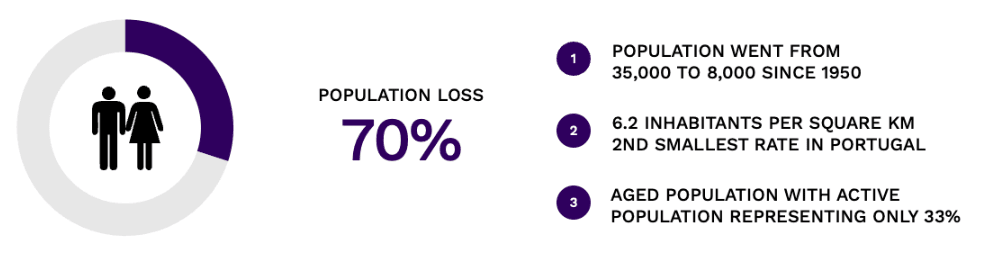
Source: Statistics Portugal (INE), 2014
The vision: A new rurality
Rather than accept this faith, the municipality opted to act. In partnership with Bloom Consulting, it launched a place branding project designed not as a marketing campaign, but as a long-term strategy to reshape perceptions, attract new residents and investment, and reposition Idanha-a-Nova as a place of opportunity.
Ten years later, the impact is clear. Familiarity with the municipality has grown significantly, perceptions have improved, demand for the territory has risen consistently over time, and the migratory balance has been achieved.
Idanha-a-Nova remains proudly rural, but today it is seen as a rural innovator rather than a forgotten patch of land in the interior of the country. It has become a living case study in how place branding, when rooted in good governance, stakeholder engagement, and long-term commitment, can shift both narratives and behaviours.
Purpose and long-term planning
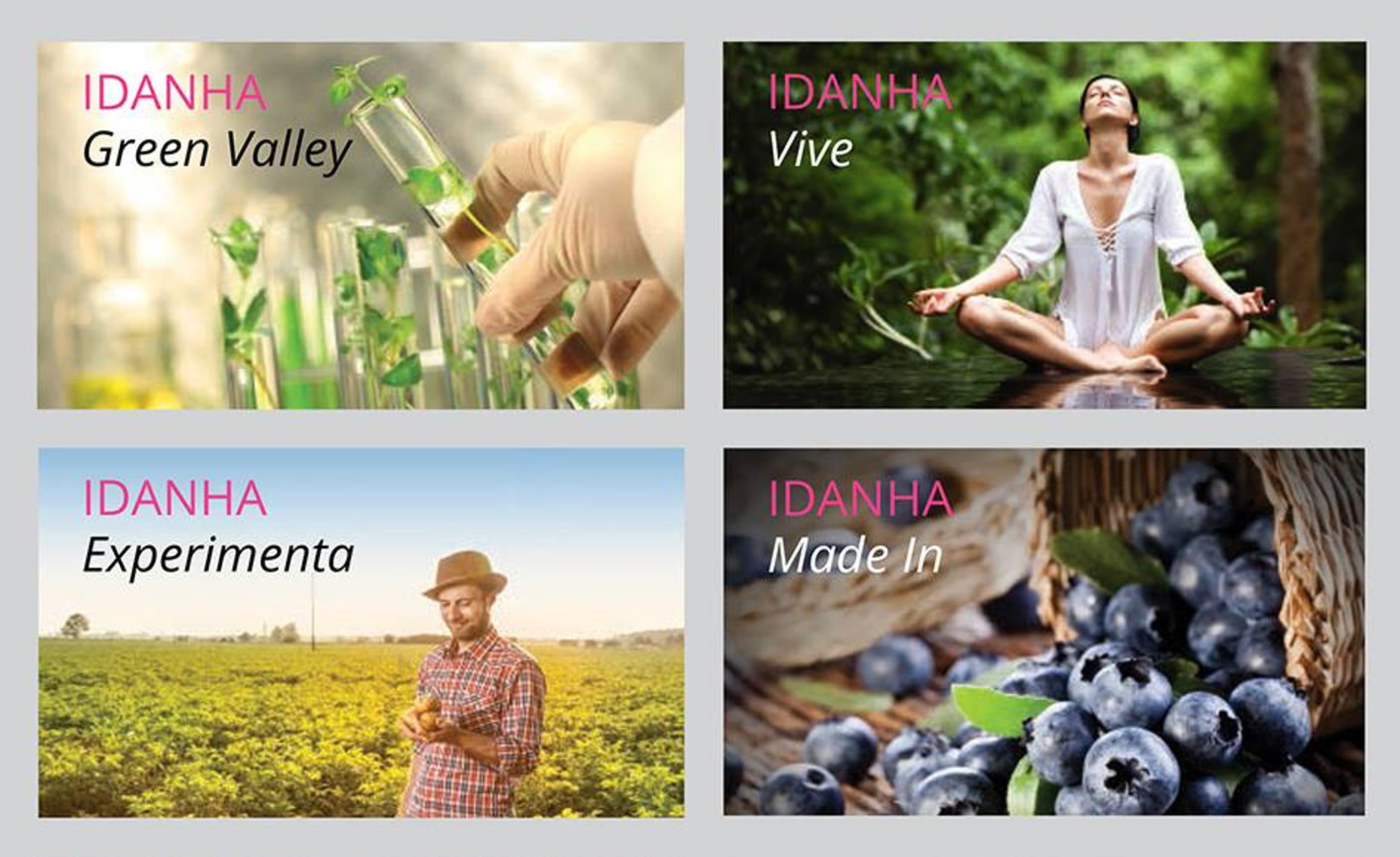
Source: “Restart in Idanha-a-Nova” strategy, developed by Bloom Consulting
The transformation of Idanha-a-Nova began with a decision to act. Faced with demographic decline and economic stagnation, the municipality chose to pursue a structured and forward-looking strategy. With the support of Bloom Consulting, a place branding approach was developed, grounded in identity, long-term vision, and collective ownership.
At the heart of the strategy were two critical objectives: to address the population loss affecting the territory and to shift the way Idanha-a-Nova was perceived, both by its own residents and by potential newcomers. The goal was never to create a new identity but to reveal and amplify the one that already existed. This is a rural municipality proud of its roots and committed to innovation, sustainability, and quality of life.
The process began with a detailed analysis of the territory and its positioning, supported by data and wide-reaching local consultation. Stakeholders from across the municipality, including citizens, entrepreneurs, institutions, and public leaders, were involved in workshops and field visits that helped shape a shared vision for the future.
This vision was not left in abstract terms. It was translated into four structured programmes, each with concrete projects focused on integration, experimentation, entrepreneurship, and external visibility. Together, these initiatives formed the foundation of a transformation that continues to evolve through purposeful and consistent implementation.
How we measured success
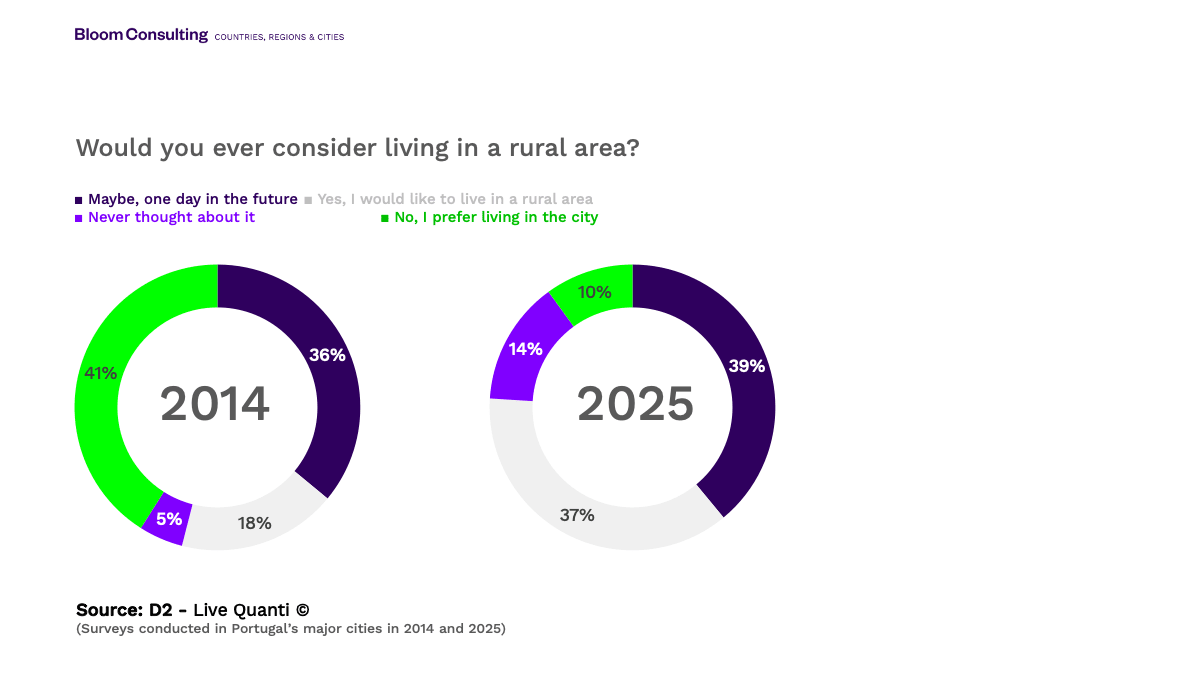
Source: D2 – LiveQuanti© - Surveys conducted in Portugal’s major cities in 2014 and 2025
To understand whether the place branding strategy was working, Idanha-a-Nova relied on a combination of perception studies and behavioural analysis. Together with Bloom Consulting, the municipality used two distinct tools to track the evolution of the strategy’s impact over time.
Perception was assessed through a survey-based methodology (D2 Live Quanti©), comparing results from 2014 and 2025. This revealed how familiarity with Idanha-a-Nova had changed, how people perceived the municipality, and whether they would consider moving there.
In parallel, online behaviour was tracked using a data tool that analyses millions of search engine queries (D2 Digital Demand©). This made it possible to measure demand for Idanha-a-Nova over time, across different topics and geographies. Unlike opinion surveys, this approach reflects real interest, based on what people actively search for.
By combining these two methods, the municipality was able to monitor both perception and demand, providing clear evidence that the strategy was not only visible but effective.
A decade of measurable impact
After ten years, Idanha-a-Nova is no longer “a forgotten patch of land” but a recognised rural innovator. Migratory balance has been achieved, demand for the territory has grown steadily, and the municipality now serves as a living case study in how place branding can reshape both perceptions and behaviors and can be done by a small place.
Today, the results of Idanha-a-Nova’s Place Brand Strategy are visible, measurable, and meaningful. Through the combined use of perception surveys and digital behaviour analysis, the municipality was able to track how people’s views evolved and whether genuine interest in the territory increased.
> Perception, Familiarity and Willingness
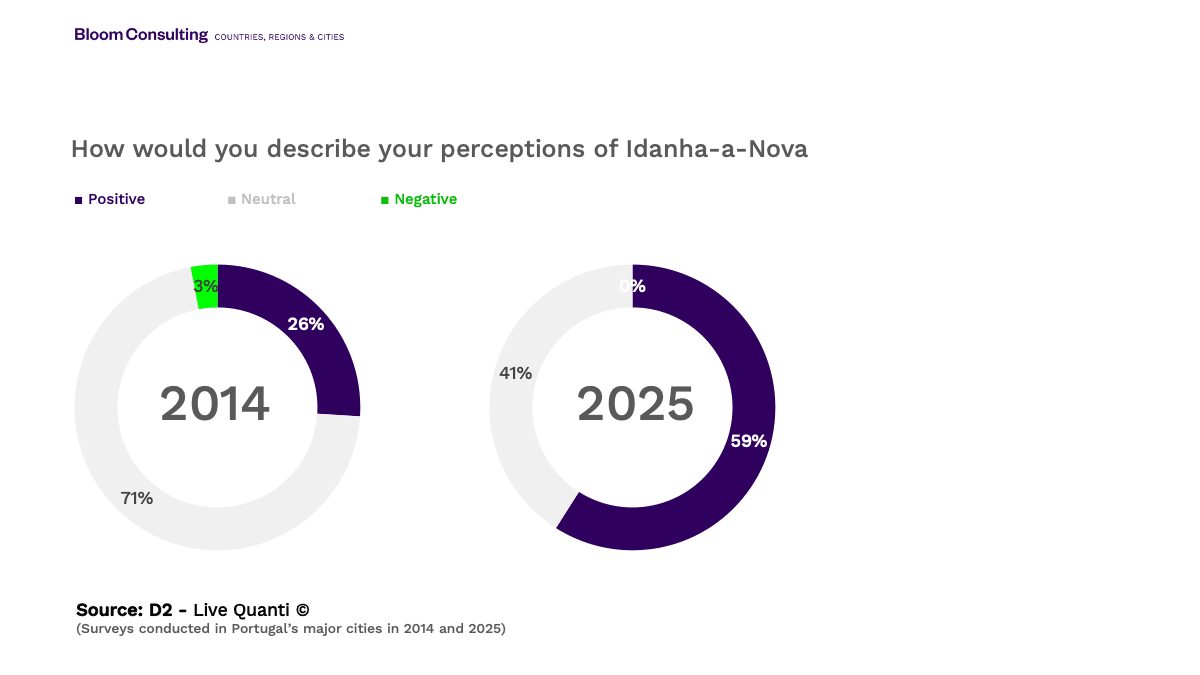
Source: D2 – LiveQuanti© - Surveys conducted in Portugal’s major cities in 2014 and 2025
Familiarity: Awareness of Idanha-a-Nova improved considerably. In 2014, a substantial portion of respondents had never heard of the municipality. By 2025, most respondents recognized the name.
Perception: Positive associations with Idanha-a-Nova increased, while negative perceptions decreased.
Willingness to Relocate: A higher number of people said they would consider living in Idanha-a-Nova in 2025 compared to 2014. Interest in moving to rural areas also grew more broadly.
These results suggest a shift in mindset, not just about Idanha-a-Nova but about rural living in general. The strategy helped reframe the idea of rurality into one of opportunity and quality of life.
> Proactive Interest
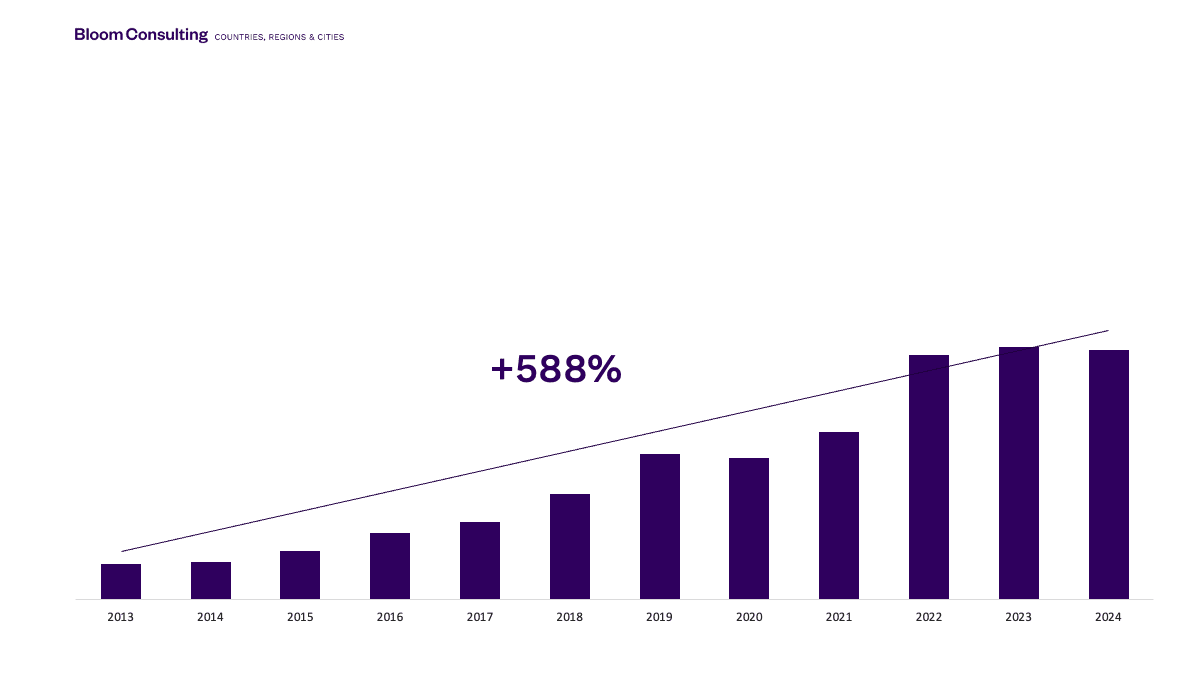
Source: D2 – Digital Demand © - Proactive Online Searches about Idanha-a-Nova in Search Engines
The evolution of online search behaviour offers additional proof of impact. Since the strategy was launched, digital demand for Idanha-a-Nova increased substantially.
Overall Growth: Online searches related to the municipality increased by 588 percent between 2013 and 2024.
International Reach: The proportion of searches originating from international markets grew from 8 percent to 23 percent. Idanha-a-Nova now receives search interest from over 30 countries each year.
Diversification of Topics: While rural life remained a strong driver of interest, searches expanded into areas such as healthcare, employment, entrepreneurship, and heritage. This indicates a broader appeal and a growing recognition of the municipality as a place where people can live, invest, and thrive.
For example, interest in healthcare topics increased by 99%, searches related to historic sites grew by 98% and employment interest rose by 27%. Entrepreneurship and business-related themes increased by over 18% and even searches linked to quality-of-life recorded growth.
> Combine insight
The survey and search data together tell a consistent story. People are more aware of Idanha-a-Nova, they have a more favourable view of the municipality, and they are more interested in exploring it as a place to live or invest. These changes are not theoretical. They are backed by data and tracked across a full decade.
Why place branding works
The experience of Idanha-a-Nova shows that place branding is not a communications exercise. It is a long-term strategic process that, when done well, can influence how people perceive a place and how they engage with it.
Over the course of a decade, Idanha-a-Nova developed and implemented a strategy rooted in its authentic identity, supported by strong governance, and sustained by collaboration with its local community. The results are not abstract. They are visible in the data. More people now know about the municipality. More people think positively of it. More people are searching for it, considering it, and engaging with what it has to offer.
Place branding works because it connects identity with purpose. It offers a framework for action and a path to relevance. In the case of Idanha-a-Nova, it proved that even the most remote territories can shift perception and attract real interest when they combine vision with consistency.
The success of Idanha-a-Nova is not about becoming something different. It is about showing the world what was already there, and doing so with clarity, intention, and measurable impact.
This case study showcases how a small destination, working with a limited budget, but with focus, was able to deliver remarkable results. It sends a powerful message to other small places worldwide - those struggling with negative perceptions, declining investment, tourism, or population - that with the right place branding strategy and the active support of local stakeholders, significant economic impact can be achieved.
Since 2003, Bloom Consulting has partnered with more than 100 territories worldwide, from major capitals to big countries. Yet, working with Idanha-a-Nova has been a special joy and privilege. It showed us that with focus, determination, political will, and citizen engagement, even the smallest places can change the rules of the game. Among all our projects, Idanha makes us especially proud: because with so little, it achieved so much, and it proved that every place could have an effective place brand - no matter its size.