



On February 24th at 3pm GMT / 10am EST, we joined four expert speakers to discover how you can join the dots internally and collaborate more effectively with event organisers to deliver measurable impact and progress towards your long-term strategic objectives. This following summary of the discussion has been generated by AI, and reviewed by humans.
1. The death of the "check-in" metric
For decades, the success of a business event was measured by a simple, transactional, and increasingly failing paradigm: "heads in beds." In this outdated model, success was defined solely by hotel occupancy rates, restaurant tax revenue, and immediate economic infusion. However, a profound shift is occurring within the global meetings industry. We are witnessing a transition from the "conference as a goal" to the "conference as a means to an end"—a catalyst for sector development and knowledge transfer.
As Milo Vergucht, International Association Expert for the Flanders Convention Bureau, asserts, the true value of an event is not found in the actual days of the program itself, but in the "Legacy and Impact" movement. This visionary approach prioritises the tangible social and intellectual benefits left behind long after the last delegate has checked out. For destinations, clinging to the check-in metric risks strategic irrelevance in a market that now demands meaningful contribution over mere consumption.
2. Impact is the new competitive advantage (The "fourth time’s a charm" rule)
The shift toward intentional impact is a strategic necessity for destinations seeking economic diversification.The Strategic Membership Solutions’ ‘Purpose Under Pressure’ report — a study of 586 associations across 30 countries done in partnership with BestCities — reveals that 70% of associations now prioritise legacy creation. These organisations are increasingly seeking immersive local experiences over pure infrastructure, aligning their gatherings with destinations that mirror their mission and purpose.
This trend is exemplified by the experience of Sam Johnston, Manager of the Dublin Convention Bureau. After three unsuccessful attempts to bid for a major international association meeting, Dublin secured the win on its fourth attempt by centering its proposal on "intentional impact." Notably, Dublin’s impact-focused bid triumphed even over the home destination of the association’s incoming president. This victory was supported by Dublin's commitment to the Madrid Challenge, a BestCities initiative focused on driving intentional social impact.
"It is a competitive advantage because we can show that we’re walking the walk as well as talking the talk with the associations... it’s the low-hanging fruit of working with associations that have intentional impact campaigns," explained Sam Johnston, Dublin Convention Bureau.
For destinations, demonstrating a commitment to social impact is no longer a "nice-to-have"; it is the primary differentiator in a world where logistics and venues have become standardised commodities.
3. The "Quadruple Helix": Why real impact requires a crowd
Meaningful legacy cannot be achieved by a convention bureau operating in a vacuum. Flanders Convention Bureau utilises the "Quadruple Helix" ecosystem model — a collaborative framework designed to break down silos and ensure that an event acts as a catalyst for innovation. This structure often facilitates the first-ever meetings between local stakeholders who, despite living in the same region, have never collaborated.
To achieve real impact, four distinct groups must be integrated:
- Academics: They provide the scientific foundation and research rigour necessary for knowledge transfer
- Entrepreneurs and corporates: This group offers market access and ensures innovations can be scaled within the local economy
- Policy makers: They ensure that conference outcomes are translates into long-term government policy and embedded in the community's future
- End beneficiaries: Operating under the philosophy of "nothing for them, without them", this group brings the authentic voice of those the event is intended to serve
4. "Uncomplicating" legacy: Leveraging events for growth
The term "legacy" can feel intimidating to event organisers, but Adrian Fourie, BD Manager for International Business Events at the Cape Town and Western Cape Convention Bureau, argues that impact is frequently already embedded in the DNA of an event, particularly within the medical and scientific sectors. While "legacy" can be a difficult concept for some officials to grasp, "leveraging events" serves as a more accessible term for government reporting, framing events as tools to move the needle on specific societal challenges.
A primary example is the 2024 International Astronomical Union meeting in Cape Town. The association invested in specialised camera equipment for digital poster presentations and subsequently donated those cameras to 200 underprivileged schools, providing immediate access to STEM tools for thousands of students.
"Don’t be intimidated when the resources are not there. Don’t let that be a reason why you’re not having the conversations," Adrian advised.
5. Speaking the language of power: Aligning with government white papers
To secure high-level political support, destination leaders must translate business event outcomes into the "language of power" used by ministers and cabinet members. Fáilte Ireland (Ireland’s national tourism development authority) achieved a milestone by having a business events strategy signed off by a government minister for the first time.
Working with #Meet4Impact to develop their framework, the team underwent a laborious process of mapping event outcomes to existing government white papers, corporate plans, and public health positions. By using specific government terminology — such as "semiconductors" or "public health outcomes" — they demonstrated how events could help the government deliver on its own results. This shift moves the conversation from the environmental "footprint" (the cost of the event) to the social "handprint" (the positive contribution). Today, Dublin showcases 14 distinct impact stories on platforms like LinkedIn and The Iceberg to prove the validity of this model.
6. The Long Game: Measurement as a design phase requirement
The consensus among global experts is that measurement is not a post-event task but a fundamental requirement of the planning process. To justify budgets and prove value, measurement must be intentional from the outset.
Meaningful impact is rarely visible at the close of the event; it must be tracked at regular intervals of one, three, or even five years post-event. For instance, during the International Social Housing Festival in Dublin, the team used a carbon calculator to track the environmental footprint while simultaneously measuring the "voice of the tenant" — a social metric that continues to be monitored as the event’s influence continues to mature.
For destinations with limited research budgets, Cape Town’s Adrian Fourie advocates for the use of AI to synthesise data points into compelling narratives. This allows smaller bureaus to create the high-level reporting necessary to justify their existence to stakeholders who demand data-driven proof of success.
7. From event host to global citizen
The business events industry is experiencing a "momentum shift," as described by Loren Christie, Managing Director of the BestCities Global Alliance. Destinations are evolving from passive hosts into proactive global citizens, assuming responsibility for the social and environmental health of their communities.
As we look toward the future, the industry faces a moral and strategic imperative: every event must leave the host community better than it was found. Programs like the Incredible Impacts Grant — a partnership between BestCities and ICCA — serve as a vital catalyst for this movement. By offering $20,000 grants for established impacts and $5,000 seed funds for new projects, the program rewards associations that use their gatherings to drive genuine global change.
By moving beyond "heads in beds," the business events sector is proving that a four-day event can indeed plant seeds of innovation and equity that flourish for generations.
Sponsors
Confirm cancellation
Something went wrong.
An error occurred trying to play the stream. Please reload the page and try again.
Close
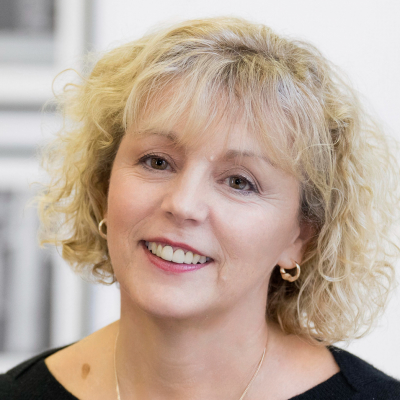
Clare is the Founder and Director of City Nation Place, the global forum for the people and stories behind places.
City Nation Place creates connections and shares best practice between country brands, regional brands, and city brands around the world through articles, interviews, surveys, benchmarking reports, awards, the advisory group network, and conferences.
Clare’s interest in the complex area of place branding was sparked whilst working on a series of Nation Branding Masterclass events, led by Simon Anholt, one of the first thought-leaders to speak about and promote the concept of place branding. Having listened to Simon address audiences in Accra, Delhi, Dubai, London and Singapore on how policy, governance, and symbolic actions need to combine with branding and marketing to create a competitive identity and drive economic growth, she continued to follow the growth in this sector.
Clare launched the first City Nation Place Global conference in London in 2015. CityNationPlace.com has been steadily building followers and in 2017, the first City Nation Place Americas conference was launched and 2019 saw the first City Nation Place UK, specifically for towns, cities and regions across the UK. In 2025, the first Australasia conference was held in Sydney, and one-off events have been held in Singapore and Costa Rica.
Loren Christie brings more than 25 years of experience in Tourism & Hospitality to his role as Managing Director of the BestCities Global Alliance. In this role, he works with 13 premier destinations and their community of clients and partners as they collectively work to ensure that business events are a force for positive impact. Previously, he held various leadership positions with Starwood Hotels & Resorts during his 17-year career with them including Director of Sales for International Congress, Business Transient and Leisure Sales at the Toronto Metro Market. From 2017 to 2020, he moved to Destination Toronto, the Destination Management Organization for Canada's largest city, where he led the International Congress and Canadian sales teams.
For the last five years he has been running his own consulting and project management company working with a number of clients including IAPCO - as faculty, #Meet4IMpact and the Global Destination Sustainability Movement (GDS) teaching parts of their masterclass on Legacy and Impact, He recently wrapped up two years as the Vice-Chair of the Global Business Travel Association's Meetings & Events Committee for Canada. He also sat on the inaugural Diversity, Equity & Inclusion Committee for the Tourism Industry Association of Ontario. Currently he sits on the Technical Advisory Committee for the GDS and is a Director of the Board for Ontario's Regional Tourism Organization 9.
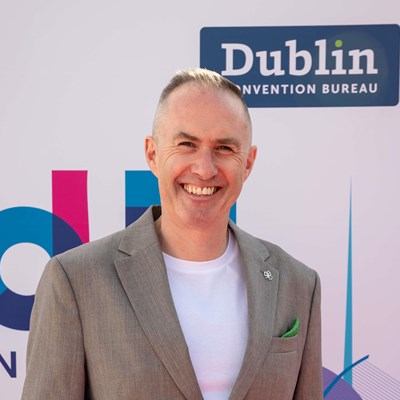
I have managed the Dublin Convention Bureau for five years and also have a responsibility for the Convention Bureau in Cork, Kerry, Shannon Region and Galway. My lucky day was in 2015 when I became Manager of Dublin Convention Bureau. I've worked in rural and urban DMOs since 1999, initially in leisure tourism but made the move to MICE in 2010 and haven't looked back. My early career involved welding equipment but left that after an incident involving nuclear submarines - ask me about that some day!
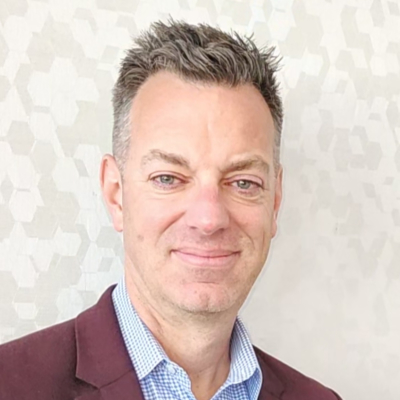
Milo Vergucht is International Association Expert at Flanders Convention Bureau (part of Visit Flanders), where he works with international associations and local stakeholders to design and deliver conferences that generate lasting value beyond the day of the event. In his role, Milo supports international associations in aligning their mission with local strengths and opportunities, connecting them with academic, sectoral, and community stakeholders, and helping organisations articulate and achieve meaningful outcomes from their events. His work emphasises cross-sector collaboration, inclusive engagement and measurable impact, to help integrate long-term objectives into event strategies.
Before joining the Convention Bureau, Milo spent nearly a decade at MCI, one of the world’s largest professional congress organisers, where he specialised in association and corporate events across the medical, scientific and professional sectors. He also led the Gent Convention Bureau and has a foundation in international hospitality, giving him both operational experience and strategic insight into how events can contribute to broader goals in research, policy, and regional development.

Adriaan Fourie is the Business Development Manager: International Business Events for the Cape Town & Western Cape Convention Bureau, a unit within Wesgro, the official tourism, trade, and investment agency for the Western Cape, South Africa. With over 20 years of experience in the business events industry, he has played a key role in positioning the region as a leading destination for international meetings, incentives, conferences, and exhibitions. With extensive experience in business tourism and stakeholder engagement, he works closely with international associations, event organisers, and local partners to secure and support major international business events. Adriaan is known for his strategic insight, collaborative approach, and strong understanding of the economic and legacy impacts of business events on destinations.