Flexibility and cultural authenticity: How Türkiye is growing their international reputation.
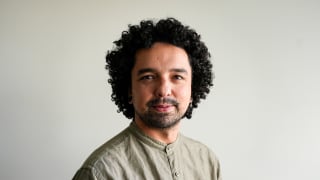
The Türkiye Brand Office was established in 2022 to strengthen their nation brand and position Türkiye in its own terms. As well as coordinating the shift from ‘Turkey’ to ‘Türkiye’, the team were tasked with putting Turkish values and culture at the forefront of their communications strategy. Nur Özkan Erbay, Head of the Türkiye Brand Office and one of our CNP Awards jury, joined us to talk about how they’ve developed a flexible brand architecture that engages stakeholders and allows for your best brand ambassadors to be discovered in the most unlikely of places.
At the start of your nation branding process, you held a Nation Branding Forum. Why was it important to you to go through this process in the early stages of your nation brand journey?
The Türkiye Nation Branding Forum was organised by the Türkiye Brand Office under the auspices of the Directorate of Communications of Republic of Türkiye at the beginning of our nation branding efforts. It was around December 2022. In the Forum, the Türkiye brand was examined across various scientific, academic, sectoral, and socio-cultural dimensions via presentations, panels, and events, by experts in their respective fields from all over the world. It was a fascinating day for the place branding community.
But the Türkiye Nation Branding Forum was more than an event that brought together top names in the nation branding field. In a way, it was our first stakeholder engagement and a huge brainstorming event. With the outcomes of the Forum, Brand Türkiye’s main pillars were determined across various fields from gastro-diplomacy to Turkish TV series. We tried to figure out our strong brand features. We can say that it was kind of a road map for Brand Türkiye ahead of our Centennial Vision, “Century of Türkiye”.
You've talked before with us about how anyone can be a 'brand builder'. How do you adapt to leverage someone or something that unexpectedly becomes an influential ambassador for Türkiye?
In the world of nation branding, understanding the roles of brand architects and brand builders is foundational. A brand architect designs the strategic core of a nation's image—defining its vision, values, and overarching messaging. In Türkiye’s case, this role is exemplified by institutions like the Türkiye Brand Office, which create the strategic frameworks within which nation branding operates.
On the other hand, a brand builder is the one who brings this framework to life—through actions, storytelling, innovation, or performance. Brand builders are diverse: they include professionals, institutions, entrepreneurs, and even everyday citizens. What makes someone a brand builder is not their title, but their ability to reflect and reinforce the nation brand through real-world interactions.
But here’s where it gets interesting: sometimes, the most influential brand builders emerge unexpectedly—and spontaneously. You may have the most well-structured strategic plan, but then someone who wasn’t on the radar suddenly captures the spirit of your nation and broadcasts it to the world.
Can you share an example?
It’s exactly what happened with Yusuf Dikeç, Türkiye’s 10-meter air pistol athlete, during the recent Olympic Games.
Without branding education, sponsorship budgets, or campaign briefings, Dikeç, became a powerful brand ambassador. His calm demeanour, authentic presence, and success in a niche sport resonated widely, turning him into a social media sensation and national hero overnight. In that moment, he became a textbook example of a brand builder—someone who embodies the essence of Türkiye on a global stage, not by strategy, but by being.
This brings us to a deeper issue in nation branding: hyper-strategizing by stakeholders. It’s tempting to think that every move in nation branding must be meticulously orchestrated. But sometimes, over-strategizing can backfire—especially when it distances the brand from authentic, human moments. If your brand vision is too abstract or detached from the lived experiences of your people, it risks irrelevance.
Although we are never fully in control of our nation brand as the Türkiye Brand office, we are, of course, designing the nation branding strategy and roadmap through our many initiatives. In our nation branding efforts, we regularly engage with experts and stakeholders to stay aligned and up to date with evolving trends and insights. Including our recent conference at the 2nd Communications Council Preparatory Workshop, where we gathered many relevant stakeholders, such as academics, institutional representatives, and experts in the field of nation branding. While being in control of our brand we also maintain harmony and balance. As the brand architects it is true that we define the playing field, but the game is played by the builders. If brand builders—from athletes to artists to businesspeople—lack a clear and resonant vision of what the nation brand stands for, then even the most beautiful strategy risks becoming an empty shell.
Yusuf Dikeç’s story reminds us that nation branding thrives in spontaneity as much as in planning. Sometimes, the most impactful brand ambassadors don’t come from boardrooms— they emerge from unexpected victories, raw authenticity, and shared pride. In a field as vibrant as nation branding, sometimes effortless action outperforms effortful planning.
So the real art lies in creating a flexible, living brand architecture—one that leaves space for individuals to step into the story in their own way. Because when someone like Dikeç steps up, he doesn’t just represent Türkiye—he becomes Türkiye in the eyes of the world.
An approach that views residents as stakeholders also means ceding some of the control of your place brand narrative. How do you make sure that everyone is singing from the same hymn sheet?
Treating residents and diverse actors as stakeholders requires accepting that you cannot fully control your place brand narrative. However, what you gain is far more valuable: a shared sense of ownership and authenticity that cannot be manufactured.
Türkiye ensures alignment among stakeholders by adopting an overarching and inclusive approach to stakeholder engagement, coordinated by the Türkiye Brand Office. Recognising that a strong nation brand relies on the unity of narrative, Türkiye involves diverse interest groups— from government bodies and the private sector to NGOs and the public—through events like the Türkiye Nation Branding Forum, strategic collaborations, and structured dialogue.
As the brand architect, the Türkiye Brand Office provides the strategic vision and messaging framework that forms the foundation of the country brand. But it’s the brand builders—those executing this vision in daily life—who make it meaningful. This is why inclusivity is not just a value but a mechanism for alignment.
To maintain coherence, the Office creates clear messaging guidelines and visual standards that allow flexibility while preserving core values. Toolkits, briefings, and open channels of communication help ensure everyone understands the brand’s direction and feels empowered to contribute to it.
The result isn’t uniformity, but harmony. When stakeholders are engaged early, respected throughout the process, and given clarity on the national narrative, they begin to express it naturally—each in their own way, yet aligned with the whole.
What is your best advice for another country looking to invest in impactful cultural diplomacy?
My best advice for another country looking to invest in impactful cultural diplomacy is to treat citizens as cultural ambassadors and build authentic, inclusive partnerships at home and abroad. As seen in Türkiye’s experience, cultural diplomacy thrives when it is rooted in authenticity, strategic coordination, and a people-centred approach. Initiatives such as the Türkiye Nation Branding Forum, along with the efforts of organisations like the Yunus Emre Institute, TİKA, our Directorate’s 26 representatives in target countries, foreign missions, and global media outlets like Anadolu Agency and TRT World, have enabled Türkiye to project its values globally while fostering mutual understanding. Empowering diaspora communities, collaborating with local and international stakeholders, and focusing on shared global priorities like sustainability, education, and cultural exchange create long-lasting, credible influence. Ultimately, impactful cultural diplomacy requires not just showcasing a country’s strengths, but also actively listening, engaging, and co-creating with other cultures.
A country looking to invest in impactful cultural diplomacy should also build its narrative through stories, not slogans. In a world overwhelmed by information, what resonates and endures are stories that touch hearts, not just minds. Cultural diplomacy becomes truly powerful when it reflects not only a country’s historical depth but also its human face, emotions, and shared aspirations.
Türkiye’s approach puts storytelling at the core of its nation branding strategy. We believe that the path to shaping global perception lies in constructing authentic, emotionally engaging narratives—from the compassionate doctor providing aid abroad to the innovative young entrepreneur breaking ground in technology. Storytelling enables us to go beyond correcting misperceptions; it helps us build lasting bonds of understanding.
It is also crucial to highlight the importance of cities in a country’s cultural diplomacy efforts. Cities contribute to a nation brand through their unique identities—take Istanbul, famously known as the 'city of cats,' for example. Along with the cats themselves, which have become beloved cultural icons, cities like Istanbul serve as unique cultural powerhouses reflecting warmth, authenticity, and everyday charm that resonate with global audiences.
The City Nation Place Awards are all about celebrating the best and brightest in place branding and place marketing. Can you share one campaign or strategy that you saw and wished you'd thought of first?
One campaign that truly stood out—and made me think “I wish we’d thought of that first”—is “Italy is simply extraordinary: beIT” campaign. This the biggest nation-branding campaign ever made by the Italian government to promote the country's values and products.
What makes it so compelling is its rare combination of cultural boldness and brand sovereignty. Rather than relying on well-worn clichés or letting others define its identity, Italy took a confident leap: it reclaimed its national image through its own voice.
The video is striking—it doesn’t just market Italy, it dismantles the stereotypes imposed by others, those postcard-ready narratives that flatten a richly layered culture. “BeIT” instead invites the world to see Italy through a new, self-defined lens. It says, implicitly but powerfully: We are not what you reduce us to. We are innovators, visionaries, artisans. We write our own story. We define ourselves.
That originality—paired with the campaign’s cinematic storytelling and globally inclusive tone— makes it one of the most authentic and rare executions in the world of place branding. It’s a masterclass in showing how a nation can project soft power without shouting, simply by speaking with clarity, pride, and purpose.
Thank you for sharing that, Nur, and we look forward to joining you for the judging!
The City Nation Place Awards are ready for entry! Check out the categories here to discover how you can impress your stakeholders and our international jury.